Showing posts with label Young Adult Fantasy. Show all posts

Monday, February 2, 2026

I Married a Beast


There's a moment in Disney's Beauty and the Beast that always makes me catch my breath. It's not the ballroom dance or even the transformation scene. It's earlier, quieter - when the Beast, nervous and awkward, throws open the doors to his library and watches Belle's face light up with wonder.

"It's wonderful!" she breathes, spinning among the floor-to-ceiling shelves.

"It's yours," he says simply.

In that moment, the Beast doesn't offer Belle jewels or gowns or empty flattery. He offers her what matters most to her - a room full of stories, ideas, and imagination. He sees who she really is. And in seeing her, he reveals himself. Two bookish souls, finding each other among the pages.

This is where their real love story begins, not with physical attraction or instant chemistry, but with shared passions and the slow recognition of kindred spirits. I had a moment like that soon after meeting my husband. I was dating the training manager at Farrell's Ice Cream Parlour, and Keith was engaged. We decided to go to the beach one day after work, and he noticed my old beach towel. I joked about it - I come from a family that gets every last drop out of a bottle of catsup. The next day, there was a new beach towel on the driver's seat of my car. This was during the days when you didn't have to lock your car, of course. 

Beauty and the Beast has endured across centuries and countless versions because its core truth remains relevant: real love requires looking beyond the surface to see someone's true character. Belle doesn't fall for the Beast's appearance - she falls for his kindness, his growth, his vulnerability, and yes, his library. She sees the person beneath the curse. The beast would have given her a new beach towel.


I kid my husband, Keith, that we're Beauty and the Beast - though I should clarify, he's actually quite handsome, and I've been known more for brains than beauty. But he can turn into a bit of a beast when he's hungry (hangry is real, folks) or when he encounters difficult people. More importantly, like the Beast with Belle, he's fiercely protective of those he loves. He guards our granddaughters and me like he's sitting on that proverbial fence, watching for any threat, ready to defend. As he says, "You want me on that fence!"


Like the Beast offering Belle his library, Keith and I have built our own collection of shared passions after fifty years of marriage. DVDs fill our shelves. We have close to 2,000 books in our Kindle Library that we own and subscribe to Kindle Unlimited. We understand each other's protective instincts, our quirks, our hunger-induced mood swings. We've learned to see past the "beastly" moments to the person underneath - and to let ourselves be fully seen in return.

In our current world, where we swipe left or right based on a photo, where first impressions are formed in seconds from social media profiles, and where we're constantly judged by superficial metrics, this message feels more important than ever. We live in a society obsessed with surface-level perfection, yet starving for genuine connection. The Beast's story reminds us that transformation happens through patience, understanding, and truly seeing one another - not despite our flaws, but through accepting our whole, complex selves.

And like Belle and her Beast, I didn't fall in love with Keith immediately. Our story is more like Ashley and Melanie in Gone with the Wind - though that comparison might raise some eyebrows - they were cousins! Stay with me here. In Margaret Mitchell's novel, Ashley reflects on how he and Melanie are suited to each other because they share the same background, values, and understanding of the world. They speak the same language, he says - much to Scarlett's fury, as she could never understand that compatibility built on shared foundations could be deeper than passionate physical attraction. She's beautiful and surrounded by suitors. Why couldn't she have Ashley, too? She didn't discover until after Melanie died that he wasn't right for her. Melanie was Ashley's one true love.

Keith and I discovered we were cut from the same cloth, like Ashley and Melanie. Our backgrounds were similar. Our fathers were born in Colorado, a few hundred miles apart. We both had devout Catholic mothers and fathers who converted to the religion - an unusual parallel that shaped both our childhoods in similar ways. We both love to read, losing ourselves in stories the way Belle treasured every book in that library. We both love movies, sharing that joy of storytelling in another form. We even both played hockey - he played ice hockey, I played field hockey. These weren't superficial similarities. They were the threads of shared experience and values that wove us together. We're the same age, know the same songs, and can speak in "movie speak" as we call it. We constantly use lines from movies, books, and songs to communicate. We're passionate about the Olympics and Oscars.

But our love wasn't love at first sight. It was the slow building of trust and understanding. It was finding someone who spoke my language. We met in February, started dating in July, got engaged in August and married the following February. 

That's the real magic of Beauty and the Beast. It's not about the spell breaking or the prince returning to his handsome form. It's about two people learning to be vulnerable enough to show their true selves and brave enough to love what they find. It is about loving the person who makes you feel comfortable.

And speaking of Disney love stories we cherish - I'm starting a new YouTube series - Writing is Life, and I'll use my storytelling skills to write the next chapter in some of Disney Studios' masterpieces. If you been wanting to become an author, or learn screenwriting from a different angle - or even learn more about AI and animation, visit https://www.youtube.com/@sandijerome and please subscribe! I'm not trying to make money on YouTube; I'm trying to promote my books and screenwriting career.

What's your favorite moment in Beauty and the Beast? Have you found your own love story in an unexpected place? Share in the comments below.


Tuesday, January 6, 2026

Catch Me If You Can


I recently received a 1-star review for one of my books. All the rest are 4s or 5s. I know exactly who did this. Yes, I have high-tech skills, and yes, I'm a computer hacker, but I'm confused about why this person did this. For me, doing this is stealing. It is the low of lows. Their revenge isn't a victory; it’s a revelation.

I once worked for a man who was suspicious of everyone, and he suspected employees were stealing from him. I was provided a free new car to drive as part of my job, but I had to pay for the gas. One day, I was underneath a huge printer, changing the ribbon, and Mr. Boss came into the parts department and asked the manager, "Is Sandi paying for her gas?" I came out from under the printer and took Mr. Boss aside. "Look," I told him quietly, "if I want to steal from you, I will steal the whole gas truck, not just a few gallons a week. With my computer skills, you'd never find it."

Yes, I am a hacker. I started using computers in the 70s, before most hackers' PARENTS were born! Computer science was my minor in college, and accounting was my major. As a CPA, we know where the money is buried. The IRS provides a 10% reward for turning in cheaters, but if I had ever done that, I'd be writing this from my yacht instead of my Florida home. But CPAs are not like lawyers; if the IRS asks us for information, there is no client/CPA confidence. We have to spill the beans. In fact, we have the responsibility to report fraud. Tax professionals, including Certified Public Accountants (CPAs) and tax attorneys, are obligated to report potential instances of tax evasion or fraud by their clients. He once argued with me that 3 years had passed on a questionable deduction - but in cases of fraud, the statute of limitations for assessment of tax never expires. The IRS can go back as many years as it wants to investigate and assess taxes, penalties, and interest. I let my boss know that, and now he had two things to worry about, but theft was his main focus.

Mr. Boss began weekly sessions in which I would tell him various ways I could steal from him. The gas truck theft would be easy, I explained to him. I'm the one who orders and approves the fuel tanks to be filled. I'd issue the purchase order, but then have the gas delivered to one of the parents on a soccer team I coached, who owns a gas station. I'd split it with the guy. A pretty easy way to steal $28,000-$40,000 every few weeks. But I explained to my extremely wealthy boss that there are three types of people. The first type is totally dishonest. They will steal at any opportunity. It is their true nature. But fortunately, most of these people are working the streets, running cons, or sitting in prison. The second group is totally honest. Born honest and raised honest. When they find a twenty-dollar bill, they pick it up and ask around, "Did anyone drop this?" I like to think I am in this group. It is the way my parents raised me. Plus, why would I ever risk everything I have: my CPA license, my home, my family, my freedom –  just to steal? Money has never been a motivator for me. It is only a measure of how much I'm appreciated.

The third group? That's where it gets interesting. They are honest until they're not. Something happens that makes them feel entitled. They feel underpaid or unappreciated. They rationalize. "That person owes me." That's when the trouble starts. I gave a workshop at the annual AICPA conference on employee theft, titled "Catch Me If You Can." I think it is the only CPA workshop where you can't buy a DVD of my presentation. The board was worried employees would use it to steal from their employers! I had so many ideas!

I came up with the title after reading the 1980 book Catch Me If You Can by Frank Abagnale Jr. and journalist Stan Redding. That book inspired the 2002 Spielberg film starring Leonardo DiCaprio and Tom Hanks. The book describes how Abagnale donned a pilot's uniform and copiloted a Pan Am jet, masqueraded as the supervising resident of a hospital, practiced law without a license, passed himself off as a college sociology professor, and cashed over $2.5 million in forged checks – and all before he was twenty-one. It's written in the first person and reads almost like a thriller. Fast-paced and entertaining, Abagnale recounts his various cons and escapes across multiple countries.

Here's where it gets interesting: the book is acknowledged to have been partly fictionalized, and the factual basis for the events has been challenged. Abagnale himself acknowledged issues with accuracy. He stated, "I was interviewed by the co-writer only about four times. I believe he did a great job telling the story, but he also overdramatized and exaggerated parts of it. That was his style and what the editor wanted." More damning, in 2020, journalist Alan C. Logan conducted an in-depth investigation and found documents that contradicted many of Abagnale's claims. Logan's investigation revealed that Abagnale was in Great Meadow Prison in New York between the ages of 17 and 20 (1965-1968). That was the exact time frame during which Abagnale claimed to have committed his most significant scams. So ironically, the greatest con Frank Abagnale may have pulled was convincing the world his cons were real in the first place. Today, he'd probably be a computer hacker.

I'd like to finish with a thought. Is hacking stealing?

I honed my hacking skills when I owned a technology company and received a ransomware demand. I circumvented the hacker and didn't pay the ransom. I have only used my powers for good. Remember, I was raised to be good. But finding out about this 1-star review? I'm not sure I'm at peace with this person. It feels intentional. A type of revenge against me. My best friend wants me to write a "best revenge book" because I have told her so many ways to get a pound of flesh, but maybe I should let it go.

Hey, does anyone want to release an updated "Catch Me If You Can"? The best ideas in Frank's book didn't even make it to the screen, and I have hundreds more. But today, I'm not writing screenplays - I'm creating my own animated series, so I'm going to move on, let it go –  and not let this dark person get inside my head. If you want to see one of my videos that helped me decide to "let it go," please watch my YouTube video - https://youtu.be/LPUMiMM4JE0.

Happy New Year, and more about my web series next month when you catch up with me when you can!


Wednesday, October 15, 2025

Writing a Book Series


Why Readers (and Writers) Are All In

When I began writing the Kira and Henry series, I didn't fully grasp the scope of what I was getting into. Now, as I finish the third book (Dangerous Treaty) and the second (Lost in the Enchanted Forest) gains momentum with readers, I understand something fundamental about modern storytelling: we're living in the age of the binge.

COVID-19 had a huge impact on how audiences consume stories. The pandemic didn't create binge culture, but it accelerated and normalized it. Viewers discovered they could watch entire seasons in weekends. Readers found comfort in knowing that more books were waiting for them when they finished one. This shift fundamentally changed audience expectations.

Today's readers approach books differently from previous generations. They're not just investing time in a single story; they're auditioning an entire fictional universe. Before committing, many readers want to know: Is there more after the last page?

Why Series Work: The Reader's Perspective

Readers who connect with your characters don't want to say goodbye after 100 or 300 pages. Series allow them to develop deeper relationships with fictional people who feel like friends. With my Kira and Henry, readers watch these characters grow, face new challenges, and evolve across multiple adventures. That investment becomes more valuable with each installment.

I'm a huge Stone Barrington (Stuart Woods) fan, and Lindsay Boxer is my alter ego. I've read every Women's Murder Club book by James Patterson. In an era of overwhelming content choices, series reduce the exhausting task of finding something new to read. If readers loved book one, they know exactly what they're getting with book two. This trust is powerful. The familiar becomes comforting rather than boring. 

There's genuine excitement in waiting for the next installment. Readers discuss theories, predict outcomes, and stay engaged with your fictional world between books. This ongoing relationship keeps your work alive in their minds far longer than standalone novels. Following Stuart Woods' death in 2022, the Stone Barrington series has been continued by other authors, such as Brett Battles.

Series allow for richer, more complex fictional worlds that standalone books simply cannot achieve. With my multiple series, Kira and Henry, Wilma Wallaby, and Carmen and Cypher I try to add layers to the universe, making it feel more real and lived-in. I also try to send a message to teens; "it will get better." If you've read my previous blogs, I didn't have an easy time with a bully of a big brother and I share that in my Wilma character. I thought I could fly and that I was fearless - but like Kira, I was afraid of failure. How about Carmen? Like me, she's learning to live with AI - embracing it and understanding how it can enrich our lives.

Why Series Work: The Writer's Perspective

For me, writing a series creates forward motion for my characters. As I enter my 3rd act of life, I can live it all over again through my characters. With each book, my characters' voices become clearer, world-building details accumulate naturally, and the story develops a life beyond initial planning. I know Kira and Henry so intimately now that their reactions to situations come automatically.

Each new book markets the previous ones. Readers who discover book three often purchase the earlier installments. Series create superfans who eagerly await each release, leave reviews, recommend books to friends, and engage with your author platform. These dedicated readers become your marketing team. Multiple books provide multiple revenue streams and more opportunities for discovery. Retailers often promote series by discounting early books, introducing new readers to your work.

The Modern Challenge: Visual Consistency

Working with my cover designer, Nilesh, I'm facing an interesting challenge that previous generations of series writers never encountered: how to age characters visually across books using AI tools.

Nilesh researched consistent character generation using AI; a crucial consideration for anyone thinking about animation or visual adaptations, including book covers. The technology relies on creating comprehensive data sets featuring characters in various poses, expressions, and environments. This custom-trained model then generates consistent imagery across different contexts.

As Nilesh explained, standard online AI platforms struggle with the frame-by-frame consistency professional animation requires. Training custom models is the solution, allowing us to generate varied content while maintaining character recognition across the series.

Why does this matter? Modern readers expect visual consistency. Book covers should show character growth while maintaining recognizable features. If Kira looks completely different on each cover, it breaks the series identity.  I plan to move into animation, so this is fantastic that he is thinking ahead. I'm all in!

Benefits of Series for Authors

Writing a series allows you to test the market with book one before making a full commitment. If readers respond enthusiastically, you continue. If not, you can pivot without having written an entire series that doesn't resonate. I read every review that I get, take note of any suggestions and learn before I start the next book. I've received a 1-star review before, but it had no comments. I think it is a special type of person that gives a book a 1-star. I didn't think I had enemies because I avoid conflict at all cost (think of the Gorgonites in Small Soldiers),  but this person wasn't even a "verified purchase." Their 1-star was intentional and might have been done by one of the hundreds of "influencers" who want my money to write a review.

Anything other than a 5-star devastates me, but this 4-star review was priceless.

 "I went in expecting polite castles and maybe a sword fight or two. What I got was a princess accused of treason, hiking into a death zone with her best friend, while pretending she doesn’t have claws. Literally. We meet trolls debating recipes for human, a mountain with mood issues, and a bridge that tries to kill you before you can cross it. But the weirdest part? Those things aren’t even the big problem. The big problem is Kira—because if her people see what’s under her skin, they’ll fear her more than anything she’s fighting. This isn’t a fairy tale. It’s a slow-burn panic attack in a crown, and I loved every nerve-wracking page." 

I  wondered why I didn't get 5 stars, but this review made my day!

Yes, series authors develop more engaged reader communities. These readers leave more reviews (fodder for our egos), participate in discussions, and feel personally invested in your success because they want more books. In addition, writing multiple books in the same universe hones your craft. You learn from each installment, improving pacing, dialogue, and plotting with every book. You don't need the entire series plotted before starting. Many successful series evolved organically as authors discovered what worked and what readers wanted more of.

Is a Series Right for You?

So, do readers want assurance of more content after the last page before investing their time? Absolutely! But it's not just about quantity—it's about the promise of a satisfying journey. Readers want to know that their emotional investment will be respected, that character arcs will develop meaningfully, and that the fictional world will continue to surprise and engage them.

A series signals that you, as the author, are committed to these characters and this world. You're not offering a one-night stand; you're proposing a long-term relationship. Writing a series isn't easier than standalone novels—if anything, it's more challenging because consistency matters enormously. But in today's binge-conditioned market, series offer unique advantages for both readers and writers.

Whether it's Kira and Henry navigating their next adventure, Wilma Wallaby solving mysteries, or Carmen and Cypher using AI to understand this world, series storytelling matches how modern audiences want to consume fiction: deeply, repeatedly, and with the comfort of knowing there's always another chapter and story waiting. The journey doesn't end with one book anymore. Today's readers want to know there's a whole spectrum of stories stretching into the future. And honestly? As a writer and reader (I have had an Amazon library since 1998 and own 2087 titles), I always want more! Onward!


Friday, June 20, 2025

Tools of the Trade

 
My dad died this month, just days before Father's Day. Before you get too sad, he was 96 and had said on his birthday, after watching a video that I had made for him, that he was "ready to go." He had been sleeping most of the day, and I think he was just tired. I inherited great health from both my parents. My mother won an award for never missing a day of school for 12 years! I can't remember her ever being sick. She died in her 70s from cancer, but growing up, she was "strong as an ox." My dad was the same; he could rip a phone book in half, and when we got attacked by a gang of teen girl pickpockets in Paris, Dad spotted one with his wallet and he grabbed her arm with a vise-like grip. The train door kept opening and shutting on her until she finally dropped his wallet.
Dad always believed in working "smarter, not harder" and using the right tool for the job. I developed high mechanical skills by following him around as a kid when he worked, and I loved retrieving whatever tool he needed. When it comes to being a writer, I find that I can work smarter and faster by using the right tools.
I often get asked how someone can get into screenwriting because they have an idea for a movie. I always start out with "write it down!" I have notebooks all over the house, and I often email myself or tell Siri to create a note. The next piece of advice I give is for a prospective screenwriter to read a script. Writing in that format is not for the faint of heart. For a former programmer like me, the structure is catnip - I love it. It doesn't stop my creative process because I bought screenwriting software a few days after I decided to write a movie. You might want to try a free trial version of one of the screenwriting programs to see if you can handle the technical aspects of the software. 
I started screenwriting with Movie Master Screenwriter 2000 and then switched to Final Draft 4 a few years later - yes, version 4, and they are now on version 13.  When it comes to choosing screenwriting software, three names consistently surface in professional circles: Final Draft, FadeIn, and Movie Magic Screenwriter. Each offers unique advantages and caters to different needs within the screenwriting community. After using all three programs extensively, I've discovered that while each has its merits, the practical realities of collaboration and industry standards often dictate your choice more than features alone.

Final Draft has maintained its position as the undisputed leader in screenwriting software for over two decades. Final Draft is the preferred screenwriting software of studios and production companies worldwide, trusted by 95% of the entertainment industry. This dominance isn't accidental—the software delivers professional-grade functionality that meets the exacting standards of Hollywood productions. The software excels in automatic formatting, eliminating the constant worry about industry-standard pagination and structure. Writers can focus entirely on their story while Final Draft handles the technical requirements behind the scenes. Recent updates have addressed long-standing user complaints, particularly with the notable 13.2.0 update, which introduced an autocorrect facility, bringing the software more in line with modern writing expectations. Final Draft's collaboration features are robust, supporting real-time editing and comprehensive revision tracking. The software includes over 100 templates, story planning tools, and production-ready export options. For screenwriters working within the studio system or collaborating with industry professionals, Final Draft's compatibility advantages are undeniable.

However, this market leadership comes with drawbacks. The software carries a premium price that can be prohibitive for emerging writers, and some users find certain features unnecessarily complex for basic screenwriting needs. I have three computers, and it only lets me have two activated. When I switch to my MAC, which handles Grammarly better, I have to deactivate either my Windows laptop or desktop and then re-activate on my MAC. I have another licence for the Final Draft GO - that I can use on my iPad, but it has limited features.

FadeIn has quietly built a reputation as the most advanced software used by professionals writing for motion pictures, television, video games, the stage, radio, and more. What sets FadeIn apart is its commitment to providing professional-level functionality without the premium pricing or bloated feature sets that can overwhelm writers.The software's interface prioritizes simplicity and speed. MacWorld gave the software a score of 4.5 out of 5, mentioning that it has "all the major features—and then some—found in industry standard Final Draft, but at a quarter of the price". FadeIn supports an impressive range of platforms, including Windows, Mac, Linux, iPhone/iPad, and Android, making it accessible to writers regardless of their preferred setup.

FadeIn's revision management and page locking features rival those found in much more expensive software. The program includes a unique Dialogue Tuner that allows writers to view and edit specific character dialogues in isolation—a feature that proves invaluable during character development and revision phases. The software also provides comprehensive import and export capabilities, theoretically making collaboration with users of other platforms seamless. The development philosophy behind FadeIn is particularly appealing: when new features, fixes, enhancements, or whatever else are available, they're made available to all users, for free. This stands in stark contrast to the subscription models and paid upgrade cycles common with other professional software.

Movie Magic Screenwriter represents the old guard of screenwriting software, and while some consider it dated, it continues to serve a dedicated user base. Movie Magic Screenwriter is an award-winning screenwriting software that formats movies, television, novels, stage plays and even comic book scripts, making it the only program for all types of creative writing.
The software's NaviDoc technology provides a unique approach to script organization, displaying your screenplay alongside outlines, scene cards, notes, and bookmarks in a unified interface. This feature proves particularly valuable for writers who prefer to see their story structure and script simultaneously. Movie Magic Screenwriter also offers the broadest template selection, supporting not just screenplays but novels, comic books, radio plays, and theatrical productions.

For writers who work across multiple formats or prefer a more traditional approach to script development, Movie Magic Screenwriter provides tools that other software often overlooks. The program includes extensive production features and remains a preferred file format of WGA, West. However, Movie Magic Screenwriter feels less modern than its competitors, and some users find its interface less intuitive than newer alternatives. The software's strength lies in its comprehensive feature set rather than its ease of use.

Pricing Comparison
Final Draft 13:
Personal License: $249.95
Academic Version: $169.95 (with valid student/teacher ID)
30-day free trial available
FadeIn Pro:
Regular License: $79.95 (one-time purchase)
Student Version: $59.95 (with verification)
Free updates for life
Movie Magic Screenwriter:
Full Version: $169.00
Academic Version: $99.95
Upgrades: $89.95 (from previous versions)
While feature comparisons and pricing considerations matter, the practical reality of professional screenwriting often overrides personal preferences. The industry's overwhelming adoption of Final Draft creates a network effect that's difficult to ignore. When producers, directors, and other collaborators expect Final Draft files, using alternative software can create unnecessary friction in the creative process.

This industry standardization became apparent in my own workflow. Yes, I started my screenwriting journey with Movie Magic Screenwriter, appreciating its comprehensive feature set and multi-format capabilities. The software served me well for initial drafts and personal projects, providing all the tools necessary for my time in UCLA's professional screenwriting program.

However, as my career progressed and collaborations became more frequent, Final Draft's industry dominance became impossible to ignore. The transition wasn't driven by superior features—Movie Magic Screenwriter had everything I needed. Instead, practical considerations forced the switch: producers expected Final Draft files, revision tracking needed to be compatible with industry standards, and seamless collaboration required speaking the same software language as everyone else in the industry.

The collaboration challenges became even more apparent when working with a producer who preferred FadeIn. While FadeIn offers excellent export capabilities and can save files in Final Draft format, the conversion process isn't always perfect. Scripts exported from FadeIn to Final Draft format often require careful line-by-line review to ensure proper formatting translation. Action lines sometimes convert to dialogue, scene headers may shift categories, and character formatting can become inconsistent. These conversion errors, while not insurmountable, add time and potential for mistakes to every collaboration.
This constant need for format verification defeats much of the efficiency gain that good screenwriting software should provide. Instead of focusing on creative development, valuable time gets spent on technical troubleshooting and format verification.

Each of these screenwriting programs offers genuine value, and the "best" choice depends on individual needs and career circumstances. FadeIn provides excellent value and professional features at an attractive price point. Movie Magic Screenwriter offers unmatched versatility for writers working across multiple formats. Final Draft, despite its premium pricing, delivers the industry compatibility that professional screenwriting often demands. For emerging screenwriters or those working on personal projects, FadeIn represents an excellent entry point with professional capabilities. Writers who work across multiple formats or prefer comprehensive organizational tools should consider Movie Magic Screenwriter. However, for screenwriters actively collaborating within the industry or aspiring to do so, Final Draft's market dominance makes it a practical necessity rather than just a preference.
But Final Draft was acquired by Cast & Crew Entertainment Services. The acquisition happened during Final Draft's 25th anniversary year. This is the same company that acquired Coverfly and that Contest tracking platform is being shut down a few months after I researched items for this book. Other popular screenwriting software you might have considered are several notable options that many writers use:
WriterDuet - Used by over 2 million screenwriters, TV shows, and blockbusters, this is particularly popular for collaboration with real-time co-writing features.
Celtx - A cloud-based platform that's popular with indie filmmakers because it combines screenwriting with pre-production tools like storyboarding and scheduling.
StudioBinder - Another comprehensive production platform that includes screenwriting as part of a larger suite of filmmaking tools.
Highland - Created by screenwriter John August (Big Fish, Charlie and the Chocolate Factory), this software works with the Fountain file format and focuses on distraction-free writing.
But the software you choose should serve your story, not complicate it. While features and pricing matter, the most important consideration is which tool enables you to focus on what truly matters: crafting compelling narratives that connect with your audience. Sometimes, that means choosing the industry standard not because it's objectively superior, but because it removes barriers to collaboration and professional integration.
My dad was extremely proud of my writing career. I think a lot of that pride came from his understanding of what I did. When I owned a technology company, he'd ask again and again, "What exactly do you do?" I'd laugh because, as a CPA, I did the books for my company, including payroll. Our software ran our own company in addition to our clients, so I wrote the code to calculate payroll, along with designing constant improvements to our software. I worked closely with investors, customers, and employees, putting in regular 14-hour days. Today, I merely write, and it is so easy for me because I know how to do it faster and better than most people. In future blogs, I'll discuss the other technology I use in my writing career, including a few programs I developed myself.

Saturday, March 15, 2025

Writer for Hire - A Platypus Movie


"The way to get started is to quit talking and begin doing."  -- Walt Disney 

A typical storyline in a Western is that a new sheriff or sharpshooter comes to town hired to do one job, and instead, he's asked to do something different. In Quigley Down Under, Marston informs Quigley his sharpshooting skills will be used to eradicate Aboriginal Australians. In Blazing Saddles, Bart is hired as the sheriff to anger the townspeople. I love these two movies!

I have found that a Writer for Hire engagement can start with an understanding that you'll use your creative skills to adapt a book or write a screenplay from a treatment, or rewrite an existing script. The typical Writer for Hire agreement contains standard industry provisions giving full creative control to the producer while requiring the writer to comply with all directions. Under these terms, the producer owns all rights to the material in perpetuity, can make unlimited changes without writer's approval, and has no obligation to actually produce the screenplay.

This type of agreement has led to several notable disputes in the entertainment industry. Art Buchwald's case against Paramount in 1990 became a landmark example when he submitted a treatment that became the basis for Coming to America. Despite contractual similarities to his concept, the studio claimed independent development. The court ultimately ruled in Buchwald's favor, exposing problematic "Hollywood accounting" practices.

Another significant case involved David Elliot and Paul Lovett's dispute with Disney over Pirates of the Caribbean. The writers claimed the script derived from their submission but faced significant hurdles in proving ownership after signing a work-for-hire agreement. Similarly, Wes Craven's estate engaged in a prolonged battle with New Line Cinema over rights to A Nightmare on Elm Street, highlighting the challenges of termination rights under copyright law.

I have performed under five different writers' agreements, and I found one common thread: creativity is not encouraged. Even after submitting a detailed treatment and sitting through Zoom calls, taking notes and asking questions, like "Can I add new material?" and being encouraged to just that -- I ended up having to delete characters and scenes that were in my treatment.

Tip: Always write the first act and get the producer's approval before continuing! 

Fortunately, I'm from the software industry and we get requests like, "Could you move the Enter button to the left side of the screen?" Everyone agrees and we make the change. But then the users scream (or the script gets bad coverage) because nothing is where the audience or users are expecting it to be. In the technology world,  we end up having to rollback the update and put the Enter button back where it was. It does no good to remind them that THEY wanted the change. If you watch the film, The Majestic, the executives "brainstorm" and rewrite the script, "What if we gave the kid a disease? Then later, "People love dogs...always gross high, so instead of a disease, we give the kid a dog?"

But as screenwriters, we have certain rules that we've been taught; never open a movie with someone waking up - and never end it with someone saying, "It was all a dream." However, just as in the software industry, we make the changes without reminding the producer that they had encouraged us to alter the storyline and create new characters during our original meeting. But like Walt Disney said, "The way to get started is to quit talking and begin doing," which highlights his belief in taking action over mere words. Thank goodness I'm no longer a 30-year-old warrior trying to win arguments! It is so much faster to merely keep the old version and rewrite, rewrite, rewrite.

This is one of the reasons why I prefer emails or texts over group Zoom meetings, or phone conferences -- where everyone wants to create a movie "by committee." The platypus's odd combination of features evokes the idea of something "created by committee."  

I've seen so many movies that are a collection of great ideas - but they don't follow the required beats, sequences, act breaks that a movie needs and the structure that we're trained to follow. This was one of the problems with Electric State, a recent Netflix offering. Some of the comments were that the film was "incoherent," with critics finding the plot muddled, the action scenes repetitive, and the characters underdeveloped - a platypus.

It might be helpful for you to obtain coverage for the treatment or previous script before starting your Writer for Hire job, or simply ask the producer exactly what changes they want made. Otherwise you might be writing a platypus screenplay that is incoherent.

In my former tech career we had a saying; "you can have it cheap, good, or fast - pick 2 out of those 3," My "brand" in screenwriting is to provide producers with all three! I have high tech skills and know Final Draft and AI software, can type as fast as I talk. I'm well-educated in screenwriting and open to changes. Change the cat to a dog -- I can handle it!


Sunday, February 16, 2025

Making First Contact

"Imagination will often carry us to worlds that never were, but without it, we go nowhere."  Carl Sagan

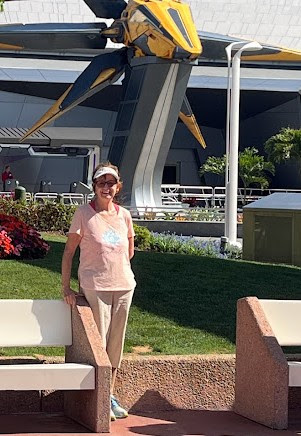
I'm a techno freak. I read science fiction and I watch science fiction. One of my producer friends is trying to get the option for one of my favorite science fiction books (hint, hint, Melissa!) Here's a picture of me on the opening day of Guardians of the Galaxy: Cosmic Rewind - at Epcot.


One of my favorite movies is Contact, a 1997 film with Jodie Foster as Dr. Eleanor "Ellie" Arroway, who makes first contact with aliens. Although I love science fiction, I've only written three screenplays that have elements of science fiction. Last Woman is more of a thriller with grounded science fiction.  It is about a young female scientist who suffers from a consuming fear of being alone due to a harrowing assault she endured in college.  When she tests a new device developed by her technology company, a strong electromagnetic pulse transports her to a world free of people and fears. But… she discovers that every time she does -- she grows further and further away from her reality and closer to the man who torments her. Another one of my scripts, Technically Soccer, is about a women's soccer team coached by a droid. Another script, Runaway Cricket  (in production at BlackOrb Studios,) is about a runaway girl befriending an alien. The first two are grounded sci-fi. Is Runaway Cricket grounded? 

What is "grounded sci-fi" and how does this set it apart from other types of science fiction? To really understand grounded sci-fi, it helps to first think about the broader sci-fi genre. Science fiction, at its core, imagines how the future might look based on speculations about technology, science, society and more. It asks "what if?" questions and creatively explores the possibilities. This could mean far-future worlds, alien life, time travel, alternate histories, and other mind-bending concepts.

But grounded sci-fi is a specific approach within this genre. The key word here is "grounded." This type of sci-fi tries to keep at least one foot firmly planted in reality. While it still speculates and imagines future possibilities, it aims to do so in a way that feels authentic and plausible based on what we currently know. Here are some key features that distinguish grounded sci-fi:

 1. Realistic science and technology: In Technically Soccer, droids already exist like AI-Me, (pronounced Amy,) which stands for Artificial Intelligence for Maximizing Efficiencies. Grounded sci-fi usually tries to base its speculative elements on real, cutting-edge science and engineering. The futuristic technologies feel like logical progressions from today's capabilities rather than pure magic or hand-waving. There's an emphasis on scientific accuracy and showing how these advancements might realistically function. 

 2. Relatable settings and characters: The worlds of grounded sci-fi tend to resemble our own, just with added layers of futuristic elements. The societies, cultures, and challenges faced by characters parallel contemporary issues in thought-provoking ways. Basically, despite the sci-fi trappings, this world still feels connected to and shaped by the one we know. Both of my "grounded" scripts take place in the present time and in ordinary settings; a house, an office building, and a soccer field. Runaway Cricket takes place in a small town that could be anywhere - on Earth. It is sort of a modern-day E.T., and if you believe in aliens...

 3. Exploration of near-future scenarios: Rather than leaping centuries or millennia ahead, grounded sci-fi often focuses on the near future, anywhere from a few years to a few decades away. It imagines the impact of emerging technologies, social trends, political changes, environmental challenges, etc., within a timeframe we can still reasonably wrap our minds around. I think the science behind Last Woman exists. An electromagnetic pulse (EMP) is a burst of electromagnetic energy that can disrupt or damage electronic equipment. The physics behind EMPs starts with a rapid acceleration of charged particles, which creates an intense electromagnetic field. This field induces electrical currents in nearby conductors - similar to how a changing magnetic field creates electricity in a generator, but far more intense and sudden. The current military significance of EMPs comes from their ability to disable electronic systems. This is one of the small storylines in my script. When the electromagnetic wave hits electronic equipment, it can induce voltage spikes that exceed what the components are designed to handle. This can burn out semiconductors, damage integrated circuits, and corrupt stored data. Could it make someone appear to "disappear?"

 4. Emphasis on plausibility and consequences: Grounded sci-fi doesn't just focus on the "wow" factor of futuristic concepts. It deeply considers the ripple effects, unintended consequences, and socio-economic implications of these advancements. It aims to tell believable stories of how technology intersects with human experiences, both good and bad. I explore this both in Technically Soccer and Last Woman.

Some well-known examples of grounded sci-fi include:

 - "The Martian" by Andy Weir: A realistic tale of an astronaut stranded on Mars, using real science to solve problems.

- "Minority Report" by Philip Kindred  Dick: A world where "precrime" police use psychics to arrest people before they commit crimes.

The book option that I'd like Melissa to get is similar to Minority Report. One of my favorite movies, is The Martian with Matt Damon, and I started a "Mars-like garden" in my backyard. 

But movies like "Star Wars," are superhero stories, far-future tales, and fantasy-leaning sci-fi wouldn't qualify as "grounded" because they tend to prioritize imagination and drama over realism. The picture above is outside Guardians of the Galaxy in Epcot. That is my favorite franchise of movies. 

 Getting back to Contact - the book vs. the movie, there are five differences I found;

 1. Ellie's childhood and relationship with her father: I write a lot of father/daughter scripts because for the past almost thirty years, I've been close to my father after my mother died. In the book, Ellie's father dies when she is quite young, fueling her interest in science and the stars as a way to feel connected to him. Her childhood, relationship with her father, and early passion for astronomy are explored in much more depth. In contrast, the movie begins with Ellie already grown up. It shows some flashbacks to her as a girl with her father, establishing their bond and her curiosity about the universe. However, this backstory is condensed compared to the book. The film focuses more on Ellie as an adult and her present-day journey.

 2. The nature and motivations of the alien message: The book goes into great scientific and philosophical detail about the alien message, its layers of meaning, and what it suggests about the nature and intentions of the senders. Decoding the message is a major plot point that reveals fascinating insights about the aliens. We don't have the luxury to write a 5-hour movie - unless your last name is Lucus or Coppola. Although a limited series is opening up in this area. The movie streamlines the philosophical, not delving as deeply into the message's complexity. The film is more focused on Ellie's quest to understand and respond to the message rather than its intricate content. The aliens' motivations are left more mysterious and open-ended.

 3. Ellie's romantic relationships: In the book, Ellie has a few romantic partners, including her longtime boyfriend Ken der Heer. Her relationships are realistically complex, influencing her emotions and personal journey throughout the story. Actors cost a lot of money, So the movie reduces this, making Palmer Joss Ellie's primary love interest. Palmer is a Christian philosopher, allowing the film to further highlight the faith vs. science themes. The on-again/off-again nature of their movie romance drives character development and provides conflict that isn't as important in a book.

 4. Ellie's role and the machine: Ellie is part of a large team building the machine in the book based on the alien instructions. She is not the sole passenger, with several international travelers taking the journey alongside her. Compare this to the movie where Ellie is the sole American representative and ends up making the voyage by herself due to sabotage and accidents. Having her go alone heightens the drama and keeps the focus on her individual experience when meeting the aliens.

 5. The meeting with the aliens: The book's alien meeting is an incredibly vivid, almost psychedelic journey through time, space and other dimensions. Ellie has lengthy, enigmatic interactions with the aliens who take on familiar forms from her mind. But In the film, the alien encounter is briefer and less abstract. The aliens appear as fuzzy, incorporeal versions of her deceased father. The dialog is more concise and less philosophical compared to the book. 

 But the best line in the movie isn't even in the book; "The universe is a pretty big place. If it's just us, it seems like an awful waste of space." Carl Sagan wrote this, but he also wrote the first draft of the screenplay. 

 Sagan and his wife, Ann Druyan began working on the movie, Contact in 1979. They wrote a film treatment over 100 pages long and set up the project at Warner Bros. with Peter Guber and Lynda Obst as producers. Nothing happened, so Sagan published Contact as a novel. In 1981, Simon & Schuster gave Sagan a $2 million advance on the novel. At the time, the advance was the largest ever made for a book that had not yet been written. Guess what? The film reentered development in 1989. With Zemeckis as director, filming ran from September 1996 to February 1997. Carl never saw the movie, he died in 1996. 

 Writing a book after the movie is something I'm very familiar with. Last year, I wrote Mama Dallas and Augie (published by Little Studio Publishing. It is based on two screenplays, one of them that I wrote; Augie. I'm hoping to write the third one, which would be the early years of Mama Dallas (Concetta) in Italy.

If we can dream…hey, that is the title of next month's blog!


Friday, December 20, 2024

Nobody Knows


I finished a TV pilot this month with an old friend, Mark, and we entered it into SeriesFest to see if we could get some bites - or bliss. It is a pretty interesting story. Mark and his wife, Arlene, moved to Mexico to find their bliss. In this picture (left) is our cousin, John, Mark and his wife, Arlene. Our TV pilot is based on Mark's comedy book Nobody Knows the Spanish I Speak. I got the coverage on it back this month, and it is fantastic!

"The writer has created an absolutely fantastic premise. The concept of Americans (from Portland) moving to Mexico to realize some idealized dream that is far from ideal is great and will provide endless setups for future episodes. I could see this done as a single-camera or multicamera show, though the format is very much a single-camera show. It's a concept that also has wide audience appeal, especially depending on how much you dig into cultural discussions and commentary.  I also love your three main characters, Charlie, Marty, and Adele. The dynamic between Charlie and Marty feels reminiscent of ALL IN THE FAMILY, though with completely different archetypes that fit contemporary audiences. They each have a very distinct personality with its own quirks, positives, and negatives. You do introduce a few locals into the pilot, but it would be great to see them even more so we get a sense of the regulars within this world that our central family will be interacting with from week to week."


Getting back to Mark, decades ago, we found that we liked to write and were both going to the Willamette Writers Conference that summer. We agreed to meet in the big tent for lunch. When Keith and I walked in, I said, "Isn't that your cousin, John, sitting next to Mark?" Yup, in Portland, a town of 2 million+, the only two people we knew - were friends with each other!  Mark and I stayed in touch over the next few decades, and it was Mark who told us when Cousin John died this year. John was an LA lawyer who moved to Portland to find his bliss and write plays. That is also Mark's bliss, writing plays, although he's quite the accomplished comedian and has written for shows like Leno. But his book has been on my Kindle all these years and has been my "go-to" book when I'm feeling sad - which has happened a few times this year. After I read it again this fall, I knew it could be a TV pilot and convinced Mark to take a leap of faith with me. He gave me the option on it and agreed to co-write the pilot.  

I changed "Mark and Arlene" to Marty and Adele - fictitious characters and then merely told Mark's story. He and Arlene have moved to San Miguel de Allende three times! They are now back in Portland. I made a fictitious city, too, to protect the huge expat community in San Miguel "where if you swing an artist, you'll hit a writer and if that writer ducks, you'll hit a jazz musician." In addition, the locals speak Spanish with the speed of a particle accelerator.
So that is what I've been knee-deep in this past month. Here's the Nobody Knows Pitch Deck.

Now, I'm starting on a horror movie, writing it with a famous artist, Guy Vasilovich, based on Edgar Allan Poe's last living relative, titled Last Poe —more on that next month!