Showing posts with label Orange Glen High School. Show all posts

Monday, February 2, 2026

I Married a Beast


There's a moment in Disney's Beauty and the Beast that always makes me catch my breath. It's not the ballroom dance or even the transformation scene. It's earlier, quieter - when the Beast, nervous and awkward, throws open the doors to his library and watches Belle's face light up with wonder.

"It's wonderful!" she breathes, spinning among the floor-to-ceiling shelves.

"It's yours," he says simply.

In that moment, the Beast doesn't offer Belle jewels or gowns or empty flattery. He offers her what matters most to her - a room full of stories, ideas, and imagination. He sees who she really is. And in seeing her, he reveals himself. Two bookish souls, finding each other among the pages.

This is where their real love story begins, not with physical attraction or instant chemistry, but with shared passions and the slow recognition of kindred spirits. I had a moment like that soon after meeting my husband. I was dating the training manager at Farrell's Ice Cream Parlour, and Keith was engaged. We decided to go to the beach one day after work, and he noticed my old beach towel. I joked about it - I come from a family that gets every last drop out of a bottle of catsup. The next day, there was a new beach towel on the driver's seat of my car. This was during the days when you didn't have to lock your car, of course. 

Beauty and the Beast has endured across centuries and countless versions because its core truth remains relevant: real love requires looking beyond the surface to see someone's true character. Belle doesn't fall for the Beast's appearance - she falls for his kindness, his growth, his vulnerability, and yes, his library. She sees the person beneath the curse. The beast would have given her a new beach towel.


I kid my husband, Keith, that we're Beauty and the Beast - though I should clarify, he's actually quite handsome, and I've been known more for brains than beauty. But he can turn into a bit of a beast when he's hungry (hangry is real, folks) or when he encounters difficult people. More importantly, like the Beast with Belle, he's fiercely protective of those he loves. He guards our granddaughters and me like he's sitting on that proverbial fence, watching for any threat, ready to defend. As he says, "You want me on that fence!"


Like the Beast offering Belle his library, Keith and I have built our own collection of shared passions after fifty years of marriage. DVDs fill our shelves. We have close to 2,000 books in our Kindle Library that we own and subscribe to Kindle Unlimited. We understand each other's protective instincts, our quirks, our hunger-induced mood swings. We've learned to see past the "beastly" moments to the person underneath - and to let ourselves be fully seen in return.

In our current world, where we swipe left or right based on a photo, where first impressions are formed in seconds from social media profiles, and where we're constantly judged by superficial metrics, this message feels more important than ever. We live in a society obsessed with surface-level perfection, yet starving for genuine connection. The Beast's story reminds us that transformation happens through patience, understanding, and truly seeing one another - not despite our flaws, but through accepting our whole, complex selves.

And like Belle and her Beast, I didn't fall in love with Keith immediately. Our story is more like Ashley and Melanie in Gone with the Wind - though that comparison might raise some eyebrows - they were cousins! Stay with me here. In Margaret Mitchell's novel, Ashley reflects on how he and Melanie are suited to each other because they share the same background, values, and understanding of the world. They speak the same language, he says - much to Scarlett's fury, as she could never understand that compatibility built on shared foundations could be deeper than passionate physical attraction. She's beautiful and surrounded by suitors. Why couldn't she have Ashley, too? She didn't discover until after Melanie died that he wasn't right for her. Melanie was Ashley's one true love.

Keith and I discovered we were cut from the same cloth, like Ashley and Melanie. Our backgrounds were similar. Our fathers were born in Colorado, a few hundred miles apart. We both had devout Catholic mothers and fathers who converted to the religion - an unusual parallel that shaped both our childhoods in similar ways. We both love to read, losing ourselves in stories the way Belle treasured every book in that library. We both love movies, sharing that joy of storytelling in another form. We even both played hockey - he played ice hockey, I played field hockey. These weren't superficial similarities. They were the threads of shared experience and values that wove us together. We're the same age, know the same songs, and can speak in "movie speak" as we call it. We constantly use lines from movies, books, and songs to communicate. We're passionate about the Olympics and Oscars.

But our love wasn't love at first sight. It was the slow building of trust and understanding. It was finding someone who spoke my language. We met in February, started dating in July, got engaged in August and married the following February. 

That's the real magic of Beauty and the Beast. It's not about the spell breaking or the prince returning to his handsome form. It's about two people learning to be vulnerable enough to show their true selves and brave enough to love what they find. It is about loving the person who makes you feel comfortable.

And speaking of Disney love stories we cherish - I'm starting a new YouTube series - Writing is Life, and I'll use my storytelling skills to write the next chapter in some of Disney Studios' masterpieces. If you been wanting to become an author, or learn screenwriting from a different angle - or even learn more about AI and animation, visit https://www.youtube.com/@sandijerome and please subscribe! I'm not trying to make money on YouTube; I'm trying to promote my books and screenwriting career.

What's your favorite moment in Beauty and the Beast? Have you found your own love story in an unexpected place? Share in the comments below.


Tuesday, January 6, 2026

Catch Me If You Can


I recently received a 1-star review for one of my books. All the rest are 4s or 5s. I know exactly who did this. Yes, I have high-tech skills, and yes, I'm a computer hacker, but I'm confused about why this person did this. For me, doing this is stealing. It is the low of lows. Their revenge isn't a victory; it’s a revelation.

I once worked for a man who was suspicious of everyone, and he suspected employees were stealing from him. I was provided a free new car to drive as part of my job, but I had to pay for the gas. One day, I was underneath a huge printer, changing the ribbon, and Mr. Boss came into the parts department and asked the manager, "Is Sandi paying for her gas?" I came out from under the printer and took Mr. Boss aside. "Look," I told him quietly, "if I want to steal from you, I will steal the whole gas truck, not just a few gallons a week. With my computer skills, you'd never find it."

Yes, I am a hacker. I started using computers in the 70s, before most hackers' PARENTS were born! Computer science was my minor in college, and accounting was my major. As a CPA, we know where the money is buried. The IRS provides a 10% reward for turning in cheaters, but if I had ever done that, I'd be writing this from my yacht instead of my Florida home. But CPAs are not like lawyers; if the IRS asks us for information, there is no client/CPA confidence. We have to spill the beans. In fact, we have the responsibility to report fraud. Tax professionals, including Certified Public Accountants (CPAs) and tax attorneys, are obligated to report potential instances of tax evasion or fraud by their clients. He once argued with me that 3 years had passed on a questionable deduction - but in cases of fraud, the statute of limitations for assessment of tax never expires. The IRS can go back as many years as it wants to investigate and assess taxes, penalties, and interest. I let my boss know that, and now he had two things to worry about, but theft was his main focus.

Mr. Boss began weekly sessions in which I would tell him various ways I could steal from him. The gas truck theft would be easy, I explained to him. I'm the one who orders and approves the fuel tanks to be filled. I'd issue the purchase order, but then have the gas delivered to one of the parents on a soccer team I coached, who owns a gas station. I'd split it with the guy. A pretty easy way to steal $28,000-$40,000 every few weeks. But I explained to my extremely wealthy boss that there are three types of people. The first type is totally dishonest. They will steal at any opportunity. It is their true nature. But fortunately, most of these people are working the streets, running cons, or sitting in prison. The second group is totally honest. Born honest and raised honest. When they find a twenty-dollar bill, they pick it up and ask around, "Did anyone drop this?" I like to think I am in this group. It is the way my parents raised me. Plus, why would I ever risk everything I have: my CPA license, my home, my family, my freedom –  just to steal? Money has never been a motivator for me. It is only a measure of how much I'm appreciated.

The third group? That's where it gets interesting. They are honest until they're not. Something happens that makes them feel entitled. They feel underpaid or unappreciated. They rationalize. "That person owes me." That's when the trouble starts. I gave a workshop at the annual AICPA conference on employee theft, titled "Catch Me If You Can." I think it is the only CPA workshop where you can't buy a DVD of my presentation. The board was worried employees would use it to steal from their employers! I had so many ideas!

I came up with the title after reading the 1980 book Catch Me If You Can by Frank Abagnale Jr. and journalist Stan Redding. That book inspired the 2002 Spielberg film starring Leonardo DiCaprio and Tom Hanks. The book describes how Abagnale donned a pilot's uniform and copiloted a Pan Am jet, masqueraded as the supervising resident of a hospital, practiced law without a license, passed himself off as a college sociology professor, and cashed over $2.5 million in forged checks – and all before he was twenty-one. It's written in the first person and reads almost like a thriller. Fast-paced and entertaining, Abagnale recounts his various cons and escapes across multiple countries.

Here's where it gets interesting: the book is acknowledged to have been partly fictionalized, and the factual basis for the events has been challenged. Abagnale himself acknowledged issues with accuracy. He stated, "I was interviewed by the co-writer only about four times. I believe he did a great job telling the story, but he also overdramatized and exaggerated parts of it. That was his style and what the editor wanted." More damning, in 2020, journalist Alan C. Logan conducted an in-depth investigation and found documents that contradicted many of Abagnale's claims. Logan's investigation revealed that Abagnale was in Great Meadow Prison in New York between the ages of 17 and 20 (1965-1968). That was the exact time frame during which Abagnale claimed to have committed his most significant scams. So ironically, the greatest con Frank Abagnale may have pulled was convincing the world his cons were real in the first place. Today, he'd probably be a computer hacker.

I'd like to finish with a thought. Is hacking stealing?

I honed my hacking skills when I owned a technology company and received a ransomware demand. I circumvented the hacker and didn't pay the ransom. I have only used my powers for good. Remember, I was raised to be good. But finding out about this 1-star review? I'm not sure I'm at peace with this person. It feels intentional. A type of revenge against me. My best friend wants me to write a "best revenge book" because I have told her so many ways to get a pound of flesh, but maybe I should let it go.

Hey, does anyone want to release an updated "Catch Me If You Can"? The best ideas in Frank's book didn't even make it to the screen, and I have hundreds more. But today, I'm not writing screenplays - I'm creating my own animated series, so I'm going to move on, let it go –  and not let this dark person get inside my head. If you want to see one of my videos that helped me decide to "let it go," please watch my YouTube video - https://youtu.be/LPUMiMM4JE0.

Happy New Year, and more about my web series next month when you catch up with me when you can!


Friday, June 20, 2025

Tools of the Trade

 
My dad died this month, just days before Father's Day. Before you get too sad, he was 96 and had said on his birthday, after watching a video that I had made for him, that he was "ready to go." He had been sleeping most of the day, and I think he was just tired. I inherited great health from both my parents. My mother won an award for never missing a day of school for 12 years! I can't remember her ever being sick. She died in her 70s from cancer, but growing up, she was "strong as an ox." My dad was the same; he could rip a phone book in half, and when we got attacked by a gang of teen girl pickpockets in Paris, Dad spotted one with his wallet and he grabbed her arm with a vise-like grip. The train door kept opening and shutting on her until she finally dropped his wallet.
Dad always believed in working "smarter, not harder" and using the right tool for the job. I developed high mechanical skills by following him around as a kid when he worked, and I loved retrieving whatever tool he needed. When it comes to being a writer, I find that I can work smarter and faster by using the right tools.
I often get asked how someone can get into screenwriting because they have an idea for a movie. I always start out with "write it down!" I have notebooks all over the house, and I often email myself or tell Siri to create a note. The next piece of advice I give is for a prospective screenwriter to read a script. Writing in that format is not for the faint of heart. For a former programmer like me, the structure is catnip - I love it. It doesn't stop my creative process because I bought screenwriting software a few days after I decided to write a movie. You might want to try a free trial version of one of the screenwriting programs to see if you can handle the technical aspects of the software. 
I started screenwriting with Movie Master Screenwriter 2000 and then switched to Final Draft 4 a few years later - yes, version 4, and they are now on version 13.  When it comes to choosing screenwriting software, three names consistently surface in professional circles: Final Draft, FadeIn, and Movie Magic Screenwriter. Each offers unique advantages and caters to different needs within the screenwriting community. After using all three programs extensively, I've discovered that while each has its merits, the practical realities of collaboration and industry standards often dictate your choice more than features alone.

Final Draft has maintained its position as the undisputed leader in screenwriting software for over two decades. Final Draft is the preferred screenwriting software of studios and production companies worldwide, trusted by 95% of the entertainment industry. This dominance isn't accidental—the software delivers professional-grade functionality that meets the exacting standards of Hollywood productions. The software excels in automatic formatting, eliminating the constant worry about industry-standard pagination and structure. Writers can focus entirely on their story while Final Draft handles the technical requirements behind the scenes. Recent updates have addressed long-standing user complaints, particularly with the notable 13.2.0 update, which introduced an autocorrect facility, bringing the software more in line with modern writing expectations. Final Draft's collaboration features are robust, supporting real-time editing and comprehensive revision tracking. The software includes over 100 templates, story planning tools, and production-ready export options. For screenwriters working within the studio system or collaborating with industry professionals, Final Draft's compatibility advantages are undeniable.

However, this market leadership comes with drawbacks. The software carries a premium price that can be prohibitive for emerging writers, and some users find certain features unnecessarily complex for basic screenwriting needs. I have three computers, and it only lets me have two activated. When I switch to my MAC, which handles Grammarly better, I have to deactivate either my Windows laptop or desktop and then re-activate on my MAC. I have another licence for the Final Draft GO - that I can use on my iPad, but it has limited features.

FadeIn has quietly built a reputation as the most advanced software used by professionals writing for motion pictures, television, video games, the stage, radio, and more. What sets FadeIn apart is its commitment to providing professional-level functionality without the premium pricing or bloated feature sets that can overwhelm writers.The software's interface prioritizes simplicity and speed. MacWorld gave the software a score of 4.5 out of 5, mentioning that it has "all the major features—and then some—found in industry standard Final Draft, but at a quarter of the price". FadeIn supports an impressive range of platforms, including Windows, Mac, Linux, iPhone/iPad, and Android, making it accessible to writers regardless of their preferred setup.

FadeIn's revision management and page locking features rival those found in much more expensive software. The program includes a unique Dialogue Tuner that allows writers to view and edit specific character dialogues in isolation—a feature that proves invaluable during character development and revision phases. The software also provides comprehensive import and export capabilities, theoretically making collaboration with users of other platforms seamless. The development philosophy behind FadeIn is particularly appealing: when new features, fixes, enhancements, or whatever else are available, they're made available to all users, for free. This stands in stark contrast to the subscription models and paid upgrade cycles common with other professional software.

Movie Magic Screenwriter represents the old guard of screenwriting software, and while some consider it dated, it continues to serve a dedicated user base. Movie Magic Screenwriter is an award-winning screenwriting software that formats movies, television, novels, stage plays and even comic book scripts, making it the only program for all types of creative writing.
The software's NaviDoc technology provides a unique approach to script organization, displaying your screenplay alongside outlines, scene cards, notes, and bookmarks in a unified interface. This feature proves particularly valuable for writers who prefer to see their story structure and script simultaneously. Movie Magic Screenwriter also offers the broadest template selection, supporting not just screenplays but novels, comic books, radio plays, and theatrical productions.

For writers who work across multiple formats or prefer a more traditional approach to script development, Movie Magic Screenwriter provides tools that other software often overlooks. The program includes extensive production features and remains a preferred file format of WGA, West. However, Movie Magic Screenwriter feels less modern than its competitors, and some users find its interface less intuitive than newer alternatives. The software's strength lies in its comprehensive feature set rather than its ease of use.

Pricing Comparison
Final Draft 13:
Personal License: $249.95
Academic Version: $169.95 (with valid student/teacher ID)
30-day free trial available
FadeIn Pro:
Regular License: $79.95 (one-time purchase)
Student Version: $59.95 (with verification)
Free updates for life
Movie Magic Screenwriter:
Full Version: $169.00
Academic Version: $99.95
Upgrades: $89.95 (from previous versions)
While feature comparisons and pricing considerations matter, the practical reality of professional screenwriting often overrides personal preferences. The industry's overwhelming adoption of Final Draft creates a network effect that's difficult to ignore. When producers, directors, and other collaborators expect Final Draft files, using alternative software can create unnecessary friction in the creative process.

This industry standardization became apparent in my own workflow. Yes, I started my screenwriting journey with Movie Magic Screenwriter, appreciating its comprehensive feature set and multi-format capabilities. The software served me well for initial drafts and personal projects, providing all the tools necessary for my time in UCLA's professional screenwriting program.

However, as my career progressed and collaborations became more frequent, Final Draft's industry dominance became impossible to ignore. The transition wasn't driven by superior features—Movie Magic Screenwriter had everything I needed. Instead, practical considerations forced the switch: producers expected Final Draft files, revision tracking needed to be compatible with industry standards, and seamless collaboration required speaking the same software language as everyone else in the industry.

The collaboration challenges became even more apparent when working with a producer who preferred FadeIn. While FadeIn offers excellent export capabilities and can save files in Final Draft format, the conversion process isn't always perfect. Scripts exported from FadeIn to Final Draft format often require careful line-by-line review to ensure proper formatting translation. Action lines sometimes convert to dialogue, scene headers may shift categories, and character formatting can become inconsistent. These conversion errors, while not insurmountable, add time and potential for mistakes to every collaboration.
This constant need for format verification defeats much of the efficiency gain that good screenwriting software should provide. Instead of focusing on creative development, valuable time gets spent on technical troubleshooting and format verification.

Each of these screenwriting programs offers genuine value, and the "best" choice depends on individual needs and career circumstances. FadeIn provides excellent value and professional features at an attractive price point. Movie Magic Screenwriter offers unmatched versatility for writers working across multiple formats. Final Draft, despite its premium pricing, delivers the industry compatibility that professional screenwriting often demands. For emerging screenwriters or those working on personal projects, FadeIn represents an excellent entry point with professional capabilities. Writers who work across multiple formats or prefer comprehensive organizational tools should consider Movie Magic Screenwriter. However, for screenwriters actively collaborating within the industry or aspiring to do so, Final Draft's market dominance makes it a practical necessity rather than just a preference.
But Final Draft was acquired by Cast & Crew Entertainment Services. The acquisition happened during Final Draft's 25th anniversary year. This is the same company that acquired Coverfly and that Contest tracking platform is being shut down a few months after I researched items for this book. Other popular screenwriting software you might have considered are several notable options that many writers use:
WriterDuet - Used by over 2 million screenwriters, TV shows, and blockbusters, this is particularly popular for collaboration with real-time co-writing features.
Celtx - A cloud-based platform that's popular with indie filmmakers because it combines screenwriting with pre-production tools like storyboarding and scheduling.
StudioBinder - Another comprehensive production platform that includes screenwriting as part of a larger suite of filmmaking tools.
Highland - Created by screenwriter John August (Big Fish, Charlie and the Chocolate Factory), this software works with the Fountain file format and focuses on distraction-free writing.
But the software you choose should serve your story, not complicate it. While features and pricing matter, the most important consideration is which tool enables you to focus on what truly matters: crafting compelling narratives that connect with your audience. Sometimes, that means choosing the industry standard not because it's objectively superior, but because it removes barriers to collaboration and professional integration.
My dad was extremely proud of my writing career. I think a lot of that pride came from his understanding of what I did. When I owned a technology company, he'd ask again and again, "What exactly do you do?" I'd laugh because, as a CPA, I did the books for my company, including payroll. Our software ran our own company in addition to our clients, so I wrote the code to calculate payroll, along with designing constant improvements to our software. I worked closely with investors, customers, and employees, putting in regular 14-hour days. Today, I merely write, and it is so easy for me because I know how to do it faster and better than most people. In future blogs, I'll discuss the other technology I use in my writing career, including a few programs I developed myself.

Thursday, August 22, 2024

"It had to be snakes," from Indiana Jones


I like snakes. When I find one in the yard, I follow it around, making a lot of noise so we both know who is the bigger animal. I grew up with good and bad snakes. The bad were the rattlesnakes in Escondido. My dad showed me how to always put my bicycle in between the snake and myself to catch the strike in the spokes and to watch it coil. Like a hurricane, a rattlesnake lets you know that it is coming. Lots of warning as It rattles its tail and coils into a tight circle – ready to strike.


A few months ago, my manager did an episode of her podcast, The Heart of Show Business with with Andrea Crosta. The Italian-born, Los Angeles-based Crosta is the founder of Earth League International, a small conservation NGO that operates like a mini-FBI, using undercover operatives to infiltrate wildlife trafficking networks while feeding information to law enforcement about the key players and their modi operandi.


At one point in the podcast, Alexia mentions how Andrea looks like Leonardo DiCaprio - and I remembered how Leo was a villain -- who becomes a hero in the movie Blood Diamond.  Leo also produced Netflix's documentary 'The Ivory Game' about Andrea's work. A few days earlier, I met James Fox during Heidi’s Hage Saga's Virtual Workday https://hanesaga.com/2024-speakers and read James’ series opener, Revolution - The Sol Saga Book 1, where the evil Silas kills his targets and takes over their body and lives -  and thought, what if someone envied a person so much that they decided to take over their life?


Python Pursuit is about a handsome, passionate wildlife conservationist who breaks up one of the biggest exotic pet trade enterprises and creates an enemy that not only wants to take away our hero's life but his identity, too, in the most gruesome way possible. Yes, it had to be about snakes.

My manager is very excited about the script, but I got worried. I'm not a thriller/horror writer. I like writing about Christmas, love, kittens, soccer, and history. Uplifting stuff, funny, with happy endings. In addition, my new friend, Melissa, who is producing Hijacked (last month's blog,) is trying to get the film rights for one of my favorite books -- a SciFi. Over the past year, my manager has acquired coverage for my scripts from Heidi Stangeland, a former book editor – turned screenwriter. She writes Thrillers and SciFI. In addition, I've discovered that everything that Heidi says about my scripts is "spot on." I call her ideas –  the "magical touch" that my scripts needed. Then, it came to me. Why not partner with Heidi?


One problem: I don't like partnerships. My hero, Steve Wozniak, wrote in his book, iWoz “Artists work best alone. Work alone.” I was able to get him to autograph his book with this quote for Keith's birthday and he added…"except with Sandi." 


“Artists work best alone. Work alone.”

― Steve Wozniak, iWoz


How can I consider having a writing partner who isn't the guy I married to? Simple, I figured out that it is a lot like programming. Rarely do programmers "collaborate" when programming. I decided that this could work in screenwriting. We'll get ideas from our manager or a producer who has an existing project or book option that we'll adapt. We can also use ideas of our own. Next, I'll do the the outline, using one of the best structures for the story like Save the Cat or the 8-sequence method that I learned in the Native American fellowship last year and write the screenplay. Then off it goes to Heidi, who will add what the story, characters, or dialogue needs. Character and dialogue are my weaker areas, and Story and Structure are my strong suits. The key in our process is that when I'm finished with the first draft – that is it. Heidi will make all the changes she wants without asking me. No collaboration or committee discussions. I like the saying that a camel is a horse designed by a committee.


Our process will greatly improve our timeline and hopefully prevent creative differences. My hope is that the next time I see the story is on the screen, I want to move to the next project. Speaking of projects, my screenplay from last month,
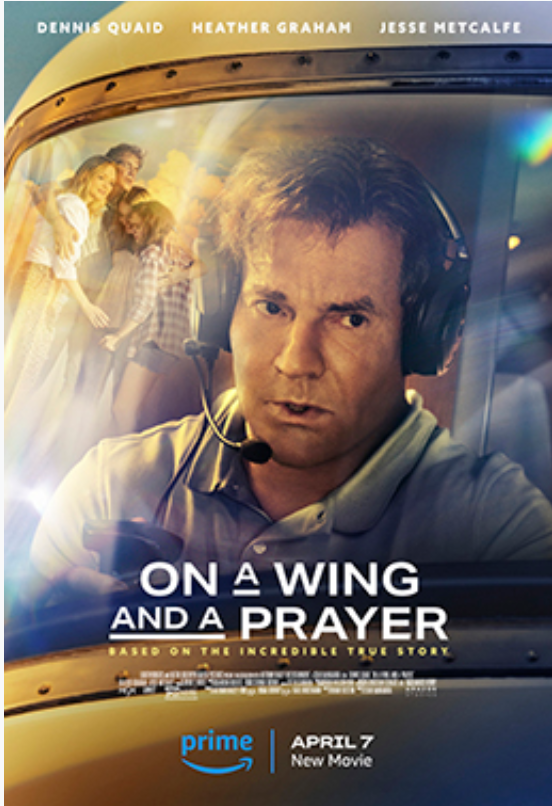
Hijacked, has taken on a production company, Autumn Bailey of AB Entertainment. She produced On a Wing and a Prayer with Dennis Quaid and has been looking for another faith-based airplane movie. This happened by chance. I use a listing service called Inktip, where I have my scripts, and various producers put out "leads" of scripts they are looking for. With 12 feature scripts and another 7 TV pilots, I respond to about 5 leads a week, and finally, someone contacted me and asked to read one of my worst scripts! Yuck. 

But when I responded to her, I thought I'd do a little research and maybe find something nice to say to her - to make up for sending her a vomit script. Well -- I found she produced On a Wing and a Prayer, and  I complimented her and gave the link about Hijacked and told her I used On a Wing as a "comp" for our movie. She immediately emailed me -- "Call me!" I did - right away, and we spent an hour on the phone talking about Hijacked. She always gets asked by Netflix, Amazon, and Apple+ - if she has another airplane/faith movie. I connected her with our Hijacked producer, Melissa and my manager, and a lovefest started. Everyone was in a buzz - but the hold-up was the Coverage for the script. That is when the dreaded reader decides if my script is a Pass, Consider, or Recommend.  It came back as a Recommend (from Heidi) the best! She made some suggestions that I took before sending it off for the WeScreenplay coverage that Autumn likes. I think you can see how this came full circle as Autumn is now a producer of Hijacked, AND has 3 of my Christmas/faith scripts in a 6-month shopping agreement.  Fingers crossed that it will be a very Merry Christmas in a few years!  I have to end this blog and get back to my Python Pursuit - and yes, "It had to be snakes!"


Tuesday, March 19, 2024

Visualization and AI - Artificial Intelligence


My dad grew up in the age of automation. Travel by horse was automated by cars; in fact, they measured vehicles by horsepower. My dad is fascinated by machinery. His favorite place is the Antique Gas & Steam Engine Museum in Vista, CA. His last job was working on the machines that automate the baking and packaging systems at Dudley's Bakery in Julian. He invented a small machine that mixed the paint for my brother's color coating business. Machines were a big part of his generation and he knows how they work. Everyone thought that automation would eliminate the need for humans, but someone needs to know how the machines work to maintain and improve them. 

I grew up in the era of computerization. I remember my first experience with computers at college and writing software. I later owned a technology company. As a CPA, my specialty was writing code to calculate net pay. If you ask the next generation how to do that, they'd say, " Go to this website and enter your number of dependents, state, and then your gross pay."  Again, people thought computers would replace humans, but instead - the computer industry has added over 800 types of jobs. For example, I'm a programmer, software designer, and database administrator -- but not a web designer. But that job has changed. Web designers used to write HTML code with an editor and then "publish" or upload it to a website. This job is changed by web design software like Squarespace and Wix. These tools are taking us into the next era - visualization.

What is visualization? It involves AI - Artificial Intelligence to create what you "see" in your mind's eye. For example, imagine a flying army of cats that put out fires. Hmm... that visualization is hard to create. It would require animators to ask, "How do they fly - wings?" The next chore would be to determine color and breed - and start drawing. Computerization has improved drawing tools, but you'll need a story before you move forward. Who organized this army of firefighting cats? Who is the lead cat, and why does she do this? Who doesn't like flying cats, and what are they doing to stop them? Story software can create this by answering questions like this, but like the person who designs and maintains the machines and computers - we'll need someone to come up with the idea of flying firefighting felines and then visualize the story.  I know you're thinking of the pitch - it is like Cats - meets Fireman Sam. I expect there to be software where you'll put in two unrelated movies and have it spit out a new movie.  But someone will still need to think of it. That is called visualization.

The age of visualization is upon us. Today, we have hundreds of thousands more filmmakers.  As in Field of Dreams, "if you build it, they will come."  YouTube, Dailymotion, Vimeo, Twitch, DTube, Vevo, Flickr, and Veoh built the platforms.  Amateurs have dipped their toes in the filmmaking arena by using Facebook, TikTok, and Instagram to get their work out there.  The tools are amazing - you can make a film on an iPhone and edit it on the flight home. I bought the latest iPhone before my big European vacation after I sold my software company, so I wouldn't need to pack a camera, video camera, or GoPro.  If you're a worker in the film and TV industry, these "amateurs" who haven't been to film school or don't have their MFA in Screenwriting might scare you - but it is like computerization and automation. We still need someone to develop the idea (screenwriter) and think of the story. A director needs to visualize the story and know how to film it. Thousands of talented and craft people must take that vision and make the show. Producers must combine all the pieces and get the show funded, filmed, sold and distributed.  But the tools to make this process easier means thousands of new jobs are coming. 

I addressed this issue in my script, Technically Soccer - where a software mogul decides to coach a soccer team with a droid. The players are initially upset that a robot has replaced a human - taken the coach’s job, but the development and maintenance of that cute little droid created dozens of jobs. Plus, the old coach was pond scum - so a win-win!  I've created a new website that is more "visual" for my new screenwriting career - visit it at SandraJerome.com


Friday, October 20, 2023

Chevy and Nature's Way

We recently entered my script, Nature's Way, in The “Writer-Driven Shorts” program, presented by the Black List x General Motors Marketing and Media Incubator Fund, which will grant two emerging filmmakers with $100,000 in production funds to shoot a short film based on their feature scripts. 

My script is about a passionate wildlife biologist who drives an old Chevy Blazer, and is determined to marry the right guy (who wants her to get a new BMW) and then falls for a minister posing as a car salesman.  I think it is pretty "Hallmark-like," but if we win, I can write it into a short that discusses why she wants to get a Chevrolet EV - like I do.  The actual applicant and filmmaker is my cohort in the Native American Medial Alliance fellowship - Derek Quick - who is an aspiring filmmaker. He has an award-winning short, Camping, that is making the festival circuit, and I'll see it next month at LASkinsFest. 

I love Chevrolet.  Next year, I hope to trade in my Equinox for a new Equinox EV.  My first new car was a 1973 Chevrolet Vega we bought during the oil crisis. My dad's first new car was a 1960 Chevrolet Bel Air. My first job was at a Chevrolet dealership in San Diego.

I met my husband at the new Farrell's Ice Cream opening in Escondido while I was in high school.  After being forced to quit Farrell’s, which had a policy against managers (Keith) dating employees (a lowly server like me), I went to an employment agency to find full-time work while attending college.  I aced a “Wonderlic” intelligence test and was quickly sent out on two job interviews, one at a mortuary and another at a car dealership.  The mortuary was wonderful: plush carpets, polished rich mahogany desks, and everyone spoke so softly.  The car dealership was horrible: loud overhead paging, steel desks, rude people and ugly furnishings. 

When I returned from the interview, the agency said, “Good news, you got the job at the dealership!”  I was sad and asked, “Can we wait to hear from the mortuary?”  They replied that I had to accept the first job offered, so I started a long career in accounting and car dealerships, eventually developing software for the industry.  It took me almost a decade to finish college, and I earned a degree in Accounting with a minor in Computer Science and became a CPA, but stayed in the car industry. The picture above is from Automotive News, taken at one of my first clients, a Chevrolet dealership in South Dakota. I sold that tech company last year and picked back up my first choice of career - writing screenplays after getting an Advanced Screenwriting Degree from UCLA.

This picture of my mom and dad was taken with his first Chevrolet that he bought used and eventually traded in on that shiny blue Chevrolet in 1960. I remember how proud he was of that new car; we took a road trip to visit Mom's family in Missouri and his family in Oklahoma. I remember this trip so well because our more rural relatives had outhouses - which reminded me of camping. That gets me back to Derek's script, Camping,  which is based on his years growing up on the reservation in Oklahoma and later being homeless - or, as his mother would say, "camping."

Wish us luck that we'll be able to make Nature's Way into an amazing short!


Saturday, September 16, 2023

Out of my Comfort Zone

The Twilight Saga is my favorite series of films and books. I discovered the books from a 12-year-old.  Almost two decades ago,  I wrote an algorithm for a dating site based on music preferences and met in the patent attorney's office in Portland to explain the logic. During a break, I noticed one of the lawyers' kids reading Twilight. He gave such an amazing pitch that I stopped by Barnes and Noble on the way home (pre-Kindle days) and bought the book. I was hooked. 

After the movies came out, we took our granddaughters up to lunch at the View Point Inn, and it was magical to be there. My love for the Pacific Northwest beaches propelled me to buy a vacation home on the Oregon coast, a few miles away from where the beach scenes were filmed.  I was on "Team Jacob" during the movie since I'm Native American and rooting for the tribe and wolves.

Over the years, I've been fascinated with wolves, especially after finding out that we are descendants of the Wolf Clan of the Cherokee tribe. I wrote a Hallmark-like romantic comedy script a few years ago, Nature's Way, set in Seattle and Port Angeles, that discusses the reintroduction of wolves into the National Parks. After doing genealogy research about my family's life before they were relocated from North Carolina to Oklahoma during the Trail of Tears, I wrote my first solo YA/MG book, Sleep Warrior, set in Cherokee, NC and the Eastern Band of the Cherokees. However, I wanted to learn more about my Oklahoma roots since my grandmother went back to the reservation close to Tulsa to die.

A few months ago, I went to Washington, D.C., to see one of my pictures that was accepted into the Smithsonian's Mirror, Mirror exhibit about the Disney Parks. While there, I visited the National Zoo and spent a lot of time with the red wolves - watching them. I decided to write a script centered around the red wolves - but in Oklahoma.  I've never written a teen light horror/fantasy script, nor one with a male lead, so I decided to write Blood Moon Wolf for my Native American Media Alliance Feature Film project this month. I had pitched 3 scripts, and this one was my last choice.  First was Kidnapped Kangaroo, which I've started this month writing as a YA book, and next was Chocolate Factory Death, based on a near panic attack I had around the loud machinery inside the Lindt chocolate factory I toured last year in Cologne, Germany.

But my cohorts liked my Blood Moon Wolf  "mini treatment" the best, so I took a deep breath and jumped into the abyss of the unknown. Teenagers as the leads? How do they talk? I reached back into the memory of helping to raise my four granddaughters and decided to name the wolf after the oldest; the leader of the pack - Chandra.  My other character, Riana a combination of Suby, Vrinda, and Tulaasi - very strong young ladies.


The one thing that made it easier was that the instructor taught us the 8-sequence method. Wow, for someone who spent a career in a highly structured world of programming and accounting, this was catnip for me. I like to say that you can eat an elephant if you start with one bite at a time...meaning that breaking down a huge project like writing a DMS system can be done by one person. I proved that right when I created DealerStar DMS fifteen years ago and sold it a few years ago. Now, I get to write full-time, and I hope to never eat an elephant because I'm a vegan and animal lover. If I write a great movie, it will be because my cohorts coaxed me out of my comfort zone, and my instructor gave me a tool to keep me sane - along with the inspiration of my four granddaughters. 

I've been doing YouTube videos - to help promote my books - and I'm working on my Amazing Animal Kingdom series. If only we had wolves! Here's the Amazing Animals playlist. Thank goodness I don't have aspirations as a filmmaker!  But I love to tell my stories!

Next will be a video about my Wild Africa Trek adventure - really out of my comfort zone!
Here's the link to my videos about Disney's Animal Kingdom