Showing posts with label UCLA. Show all posts

Monday, February 2, 2026

I Married a Beast


There's a moment in Disney's Beauty and the Beast that always makes me catch my breath. It's not the ballroom dance or even the transformation scene. It's earlier, quieter - when the Beast, nervous and awkward, throws open the doors to his library and watches Belle's face light up with wonder.

"It's wonderful!" she breathes, spinning among the floor-to-ceiling shelves.

"It's yours," he says simply.

In that moment, the Beast doesn't offer Belle jewels or gowns or empty flattery. He offers her what matters most to her - a room full of stories, ideas, and imagination. He sees who she really is. And in seeing her, he reveals himself. Two bookish souls, finding each other among the pages.

This is where their real love story begins, not with physical attraction or instant chemistry, but with shared passions and the slow recognition of kindred spirits. I had a moment like that soon after meeting my husband. I was dating the training manager at Farrell's Ice Cream Parlour, and Keith was engaged. We decided to go to the beach one day after work, and he noticed my old beach towel. I joked about it - I come from a family that gets every last drop out of a bottle of catsup. The next day, there was a new beach towel on the driver's seat of my car. This was during the days when you didn't have to lock your car, of course. 

Beauty and the Beast has endured across centuries and countless versions because its core truth remains relevant: real love requires looking beyond the surface to see someone's true character. Belle doesn't fall for the Beast's appearance - she falls for his kindness, his growth, his vulnerability, and yes, his library. She sees the person beneath the curse. The beast would have given her a new beach towel.


I kid my husband, Keith, that we're Beauty and the Beast - though I should clarify, he's actually quite handsome, and I've been known more for brains than beauty. But he can turn into a bit of a beast when he's hungry (hangry is real, folks) or when he encounters difficult people. More importantly, like the Beast with Belle, he's fiercely protective of those he loves. He guards our granddaughters and me like he's sitting on that proverbial fence, watching for any threat, ready to defend. As he says, "You want me on that fence!"


Like the Beast offering Belle his library, Keith and I have built our own collection of shared passions after fifty years of marriage. DVDs fill our shelves. We have close to 2,000 books in our Kindle Library that we own and subscribe to Kindle Unlimited. We understand each other's protective instincts, our quirks, our hunger-induced mood swings. We've learned to see past the "beastly" moments to the person underneath - and to let ourselves be fully seen in return.

In our current world, where we swipe left or right based on a photo, where first impressions are formed in seconds from social media profiles, and where we're constantly judged by superficial metrics, this message feels more important than ever. We live in a society obsessed with surface-level perfection, yet starving for genuine connection. The Beast's story reminds us that transformation happens through patience, understanding, and truly seeing one another - not despite our flaws, but through accepting our whole, complex selves.

And like Belle and her Beast, I didn't fall in love with Keith immediately. Our story is more like Ashley and Melanie in Gone with the Wind - though that comparison might raise some eyebrows - they were cousins! Stay with me here. In Margaret Mitchell's novel, Ashley reflects on how he and Melanie are suited to each other because they share the same background, values, and understanding of the world. They speak the same language, he says - much to Scarlett's fury, as she could never understand that compatibility built on shared foundations could be deeper than passionate physical attraction. She's beautiful and surrounded by suitors. Why couldn't she have Ashley, too? She didn't discover until after Melanie died that he wasn't right for her. Melanie was Ashley's one true love.

Keith and I discovered we were cut from the same cloth, like Ashley and Melanie. Our backgrounds were similar. Our fathers were born in Colorado, a few hundred miles apart. We both had devout Catholic mothers and fathers who converted to the religion - an unusual parallel that shaped both our childhoods in similar ways. We both love to read, losing ourselves in stories the way Belle treasured every book in that library. We both love movies, sharing that joy of storytelling in another form. We even both played hockey - he played ice hockey, I played field hockey. These weren't superficial similarities. They were the threads of shared experience and values that wove us together. We're the same age, know the same songs, and can speak in "movie speak" as we call it. We constantly use lines from movies, books, and songs to communicate. We're passionate about the Olympics and Oscars.

But our love wasn't love at first sight. It was the slow building of trust and understanding. It was finding someone who spoke my language. We met in February, started dating in July, got engaged in August and married the following February. 

That's the real magic of Beauty and the Beast. It's not about the spell breaking or the prince returning to his handsome form. It's about two people learning to be vulnerable enough to show their true selves and brave enough to love what they find. It is about loving the person who makes you feel comfortable.

And speaking of Disney love stories we cherish - I'm starting a new YouTube series - Writing is Life, and I'll use my storytelling skills to write the next chapter in some of Disney Studios' masterpieces. If you been wanting to become an author, or learn screenwriting from a different angle - or even learn more about AI and animation, visit https://www.youtube.com/@sandijerome and please subscribe! I'm not trying to make money on YouTube; I'm trying to promote my books and screenwriting career.

What's your favorite moment in Beauty and the Beast? Have you found your own love story in an unexpected place? Share in the comments below.


Tuesday, January 6, 2026

Catch Me If You Can


I recently received a 1-star review for one of my books. All the rest are 4s or 5s. I know exactly who did this. Yes, I have high-tech skills, and yes, I'm a computer hacker, but I'm confused about why this person did this. For me, doing this is stealing. It is the low of lows. Their revenge isn't a victory; it’s a revelation.

I once worked for a man who was suspicious of everyone, and he suspected employees were stealing from him. I was provided a free new car to drive as part of my job, but I had to pay for the gas. One day, I was underneath a huge printer, changing the ribbon, and Mr. Boss came into the parts department and asked the manager, "Is Sandi paying for her gas?" I came out from under the printer and took Mr. Boss aside. "Look," I told him quietly, "if I want to steal from you, I will steal the whole gas truck, not just a few gallons a week. With my computer skills, you'd never find it."

Yes, I am a hacker. I started using computers in the 70s, before most hackers' PARENTS were born! Computer science was my minor in college, and accounting was my major. As a CPA, we know where the money is buried. The IRS provides a 10% reward for turning in cheaters, but if I had ever done that, I'd be writing this from my yacht instead of my Florida home. But CPAs are not like lawyers; if the IRS asks us for information, there is no client/CPA confidence. We have to spill the beans. In fact, we have the responsibility to report fraud. Tax professionals, including Certified Public Accountants (CPAs) and tax attorneys, are obligated to report potential instances of tax evasion or fraud by their clients. He once argued with me that 3 years had passed on a questionable deduction - but in cases of fraud, the statute of limitations for assessment of tax never expires. The IRS can go back as many years as it wants to investigate and assess taxes, penalties, and interest. I let my boss know that, and now he had two things to worry about, but theft was his main focus.

Mr. Boss began weekly sessions in which I would tell him various ways I could steal from him. The gas truck theft would be easy, I explained to him. I'm the one who orders and approves the fuel tanks to be filled. I'd issue the purchase order, but then have the gas delivered to one of the parents on a soccer team I coached, who owns a gas station. I'd split it with the guy. A pretty easy way to steal $28,000-$40,000 every few weeks. But I explained to my extremely wealthy boss that there are three types of people. The first type is totally dishonest. They will steal at any opportunity. It is their true nature. But fortunately, most of these people are working the streets, running cons, or sitting in prison. The second group is totally honest. Born honest and raised honest. When they find a twenty-dollar bill, they pick it up and ask around, "Did anyone drop this?" I like to think I am in this group. It is the way my parents raised me. Plus, why would I ever risk everything I have: my CPA license, my home, my family, my freedom –  just to steal? Money has never been a motivator for me. It is only a measure of how much I'm appreciated.

The third group? That's where it gets interesting. They are honest until they're not. Something happens that makes them feel entitled. They feel underpaid or unappreciated. They rationalize. "That person owes me." That's when the trouble starts. I gave a workshop at the annual AICPA conference on employee theft, titled "Catch Me If You Can." I think it is the only CPA workshop where you can't buy a DVD of my presentation. The board was worried employees would use it to steal from their employers! I had so many ideas!

I came up with the title after reading the 1980 book Catch Me If You Can by Frank Abagnale Jr. and journalist Stan Redding. That book inspired the 2002 Spielberg film starring Leonardo DiCaprio and Tom Hanks. The book describes how Abagnale donned a pilot's uniform and copiloted a Pan Am jet, masqueraded as the supervising resident of a hospital, practiced law without a license, passed himself off as a college sociology professor, and cashed over $2.5 million in forged checks – and all before he was twenty-one. It's written in the first person and reads almost like a thriller. Fast-paced and entertaining, Abagnale recounts his various cons and escapes across multiple countries.

Here's where it gets interesting: the book is acknowledged to have been partly fictionalized, and the factual basis for the events has been challenged. Abagnale himself acknowledged issues with accuracy. He stated, "I was interviewed by the co-writer only about four times. I believe he did a great job telling the story, but he also overdramatized and exaggerated parts of it. That was his style and what the editor wanted." More damning, in 2020, journalist Alan C. Logan conducted an in-depth investigation and found documents that contradicted many of Abagnale's claims. Logan's investigation revealed that Abagnale was in Great Meadow Prison in New York between the ages of 17 and 20 (1965-1968). That was the exact time frame during which Abagnale claimed to have committed his most significant scams. So ironically, the greatest con Frank Abagnale may have pulled was convincing the world his cons were real in the first place. Today, he'd probably be a computer hacker.

I'd like to finish with a thought. Is hacking stealing?

I honed my hacking skills when I owned a technology company and received a ransomware demand. I circumvented the hacker and didn't pay the ransom. I have only used my powers for good. Remember, I was raised to be good. But finding out about this 1-star review? I'm not sure I'm at peace with this person. It feels intentional. A type of revenge against me. My best friend wants me to write a "best revenge book" because I have told her so many ways to get a pound of flesh, but maybe I should let it go.

Hey, does anyone want to release an updated "Catch Me If You Can"? The best ideas in Frank's book didn't even make it to the screen, and I have hundreds more. But today, I'm not writing screenplays - I'm creating my own animated series, so I'm going to move on, let it go –  and not let this dark person get inside my head. If you want to see one of my videos that helped me decide to "let it go," please watch my YouTube video - https://youtu.be/LPUMiMM4JE0.

Happy New Year, and more about my web series next month when you catch up with me when you can!


Friday, June 20, 2025

Tools of the Trade

 
My dad died this month, just days before Father's Day. Before you get too sad, he was 96 and had said on his birthday, after watching a video that I had made for him, that he was "ready to go." He had been sleeping most of the day, and I think he was just tired. I inherited great health from both my parents. My mother won an award for never missing a day of school for 12 years! I can't remember her ever being sick. She died in her 70s from cancer, but growing up, she was "strong as an ox." My dad was the same; he could rip a phone book in half, and when we got attacked by a gang of teen girl pickpockets in Paris, Dad spotted one with his wallet and he grabbed her arm with a vise-like grip. The train door kept opening and shutting on her until she finally dropped his wallet.
Dad always believed in working "smarter, not harder" and using the right tool for the job. I developed high mechanical skills by following him around as a kid when he worked, and I loved retrieving whatever tool he needed. When it comes to being a writer, I find that I can work smarter and faster by using the right tools.
I often get asked how someone can get into screenwriting because they have an idea for a movie. I always start out with "write it down!" I have notebooks all over the house, and I often email myself or tell Siri to create a note. The next piece of advice I give is for a prospective screenwriter to read a script. Writing in that format is not for the faint of heart. For a former programmer like me, the structure is catnip - I love it. It doesn't stop my creative process because I bought screenwriting software a few days after I decided to write a movie. You might want to try a free trial version of one of the screenwriting programs to see if you can handle the technical aspects of the software. 
I started screenwriting with Movie Master Screenwriter 2000 and then switched to Final Draft 4 a few years later - yes, version 4, and they are now on version 13.  When it comes to choosing screenwriting software, three names consistently surface in professional circles: Final Draft, FadeIn, and Movie Magic Screenwriter. Each offers unique advantages and caters to different needs within the screenwriting community. After using all three programs extensively, I've discovered that while each has its merits, the practical realities of collaboration and industry standards often dictate your choice more than features alone.

Final Draft has maintained its position as the undisputed leader in screenwriting software for over two decades. Final Draft is the preferred screenwriting software of studios and production companies worldwide, trusted by 95% of the entertainment industry. This dominance isn't accidental—the software delivers professional-grade functionality that meets the exacting standards of Hollywood productions. The software excels in automatic formatting, eliminating the constant worry about industry-standard pagination and structure. Writers can focus entirely on their story while Final Draft handles the technical requirements behind the scenes. Recent updates have addressed long-standing user complaints, particularly with the notable 13.2.0 update, which introduced an autocorrect facility, bringing the software more in line with modern writing expectations. Final Draft's collaboration features are robust, supporting real-time editing and comprehensive revision tracking. The software includes over 100 templates, story planning tools, and production-ready export options. For screenwriters working within the studio system or collaborating with industry professionals, Final Draft's compatibility advantages are undeniable.

However, this market leadership comes with drawbacks. The software carries a premium price that can be prohibitive for emerging writers, and some users find certain features unnecessarily complex for basic screenwriting needs. I have three computers, and it only lets me have two activated. When I switch to my MAC, which handles Grammarly better, I have to deactivate either my Windows laptop or desktop and then re-activate on my MAC. I have another licence for the Final Draft GO - that I can use on my iPad, but it has limited features.

FadeIn has quietly built a reputation as the most advanced software used by professionals writing for motion pictures, television, video games, the stage, radio, and more. What sets FadeIn apart is its commitment to providing professional-level functionality without the premium pricing or bloated feature sets that can overwhelm writers.The software's interface prioritizes simplicity and speed. MacWorld gave the software a score of 4.5 out of 5, mentioning that it has "all the major features—and then some—found in industry standard Final Draft, but at a quarter of the price". FadeIn supports an impressive range of platforms, including Windows, Mac, Linux, iPhone/iPad, and Android, making it accessible to writers regardless of their preferred setup.

FadeIn's revision management and page locking features rival those found in much more expensive software. The program includes a unique Dialogue Tuner that allows writers to view and edit specific character dialogues in isolation—a feature that proves invaluable during character development and revision phases. The software also provides comprehensive import and export capabilities, theoretically making collaboration with users of other platforms seamless. The development philosophy behind FadeIn is particularly appealing: when new features, fixes, enhancements, or whatever else are available, they're made available to all users, for free. This stands in stark contrast to the subscription models and paid upgrade cycles common with other professional software.

Movie Magic Screenwriter represents the old guard of screenwriting software, and while some consider it dated, it continues to serve a dedicated user base. Movie Magic Screenwriter is an award-winning screenwriting software that formats movies, television, novels, stage plays and even comic book scripts, making it the only program for all types of creative writing.
The software's NaviDoc technology provides a unique approach to script organization, displaying your screenplay alongside outlines, scene cards, notes, and bookmarks in a unified interface. This feature proves particularly valuable for writers who prefer to see their story structure and script simultaneously. Movie Magic Screenwriter also offers the broadest template selection, supporting not just screenplays but novels, comic books, radio plays, and theatrical productions.

For writers who work across multiple formats or prefer a more traditional approach to script development, Movie Magic Screenwriter provides tools that other software often overlooks. The program includes extensive production features and remains a preferred file format of WGA, West. However, Movie Magic Screenwriter feels less modern than its competitors, and some users find its interface less intuitive than newer alternatives. The software's strength lies in its comprehensive feature set rather than its ease of use.

Pricing Comparison
Final Draft 13:
Personal License: $249.95
Academic Version: $169.95 (with valid student/teacher ID)
30-day free trial available
FadeIn Pro:
Regular License: $79.95 (one-time purchase)
Student Version: $59.95 (with verification)
Free updates for life
Movie Magic Screenwriter:
Full Version: $169.00
Academic Version: $99.95
Upgrades: $89.95 (from previous versions)
While feature comparisons and pricing considerations matter, the practical reality of professional screenwriting often overrides personal preferences. The industry's overwhelming adoption of Final Draft creates a network effect that's difficult to ignore. When producers, directors, and other collaborators expect Final Draft files, using alternative software can create unnecessary friction in the creative process.

This industry standardization became apparent in my own workflow. Yes, I started my screenwriting journey with Movie Magic Screenwriter, appreciating its comprehensive feature set and multi-format capabilities. The software served me well for initial drafts and personal projects, providing all the tools necessary for my time in UCLA's professional screenwriting program.

However, as my career progressed and collaborations became more frequent, Final Draft's industry dominance became impossible to ignore. The transition wasn't driven by superior features—Movie Magic Screenwriter had everything I needed. Instead, practical considerations forced the switch: producers expected Final Draft files, revision tracking needed to be compatible with industry standards, and seamless collaboration required speaking the same software language as everyone else in the industry.

The collaboration challenges became even more apparent when working with a producer who preferred FadeIn. While FadeIn offers excellent export capabilities and can save files in Final Draft format, the conversion process isn't always perfect. Scripts exported from FadeIn to Final Draft format often require careful line-by-line review to ensure proper formatting translation. Action lines sometimes convert to dialogue, scene headers may shift categories, and character formatting can become inconsistent. These conversion errors, while not insurmountable, add time and potential for mistakes to every collaboration.
This constant need for format verification defeats much of the efficiency gain that good screenwriting software should provide. Instead of focusing on creative development, valuable time gets spent on technical troubleshooting and format verification.

Each of these screenwriting programs offers genuine value, and the "best" choice depends on individual needs and career circumstances. FadeIn provides excellent value and professional features at an attractive price point. Movie Magic Screenwriter offers unmatched versatility for writers working across multiple formats. Final Draft, despite its premium pricing, delivers the industry compatibility that professional screenwriting often demands. For emerging screenwriters or those working on personal projects, FadeIn represents an excellent entry point with professional capabilities. Writers who work across multiple formats or prefer comprehensive organizational tools should consider Movie Magic Screenwriter. However, for screenwriters actively collaborating within the industry or aspiring to do so, Final Draft's market dominance makes it a practical necessity rather than just a preference.
But Final Draft was acquired by Cast & Crew Entertainment Services. The acquisition happened during Final Draft's 25th anniversary year. This is the same company that acquired Coverfly and that Contest tracking platform is being shut down a few months after I researched items for this book. Other popular screenwriting software you might have considered are several notable options that many writers use:
WriterDuet - Used by over 2 million screenwriters, TV shows, and blockbusters, this is particularly popular for collaboration with real-time co-writing features.
Celtx - A cloud-based platform that's popular with indie filmmakers because it combines screenwriting with pre-production tools like storyboarding and scheduling.
StudioBinder - Another comprehensive production platform that includes screenwriting as part of a larger suite of filmmaking tools.
Highland - Created by screenwriter John August (Big Fish, Charlie and the Chocolate Factory), this software works with the Fountain file format and focuses on distraction-free writing.
But the software you choose should serve your story, not complicate it. While features and pricing matter, the most important consideration is which tool enables you to focus on what truly matters: crafting compelling narratives that connect with your audience. Sometimes, that means choosing the industry standard not because it's objectively superior, but because it removes barriers to collaboration and professional integration.
My dad was extremely proud of my writing career. I think a lot of that pride came from his understanding of what I did. When I owned a technology company, he'd ask again and again, "What exactly do you do?" I'd laugh because, as a CPA, I did the books for my company, including payroll. Our software ran our own company in addition to our clients, so I wrote the code to calculate payroll, along with designing constant improvements to our software. I worked closely with investors, customers, and employees, putting in regular 14-hour days. Today, I merely write, and it is so easy for me because I know how to do it faster and better than most people. In future blogs, I'll discuss the other technology I use in my writing career, including a few programs I developed myself.

Saturday, March 15, 2025

Writer for Hire - A Platypus Movie


"The way to get started is to quit talking and begin doing."  -- Walt Disney 

A typical storyline in a Western is that a new sheriff or sharpshooter comes to town hired to do one job, and instead, he's asked to do something different. In Quigley Down Under, Marston informs Quigley his sharpshooting skills will be used to eradicate Aboriginal Australians. In Blazing Saddles, Bart is hired as the sheriff to anger the townspeople. I love these two movies!

I have found that a Writer for Hire engagement can start with an understanding that you'll use your creative skills to adapt a book or write a screenplay from a treatment, or rewrite an existing script. The typical Writer for Hire agreement contains standard industry provisions giving full creative control to the producer while requiring the writer to comply with all directions. Under these terms, the producer owns all rights to the material in perpetuity, can make unlimited changes without writer's approval, and has no obligation to actually produce the screenplay.

This type of agreement has led to several notable disputes in the entertainment industry. Art Buchwald's case against Paramount in 1990 became a landmark example when he submitted a treatment that became the basis for Coming to America. Despite contractual similarities to his concept, the studio claimed independent development. The court ultimately ruled in Buchwald's favor, exposing problematic "Hollywood accounting" practices.

Another significant case involved David Elliot and Paul Lovett's dispute with Disney over Pirates of the Caribbean. The writers claimed the script derived from their submission but faced significant hurdles in proving ownership after signing a work-for-hire agreement. Similarly, Wes Craven's estate engaged in a prolonged battle with New Line Cinema over rights to A Nightmare on Elm Street, highlighting the challenges of termination rights under copyright law.

I have performed under five different writers' agreements, and I found one common thread: creativity is not encouraged. Even after submitting a detailed treatment and sitting through Zoom calls, taking notes and asking questions, like "Can I add new material?" and being encouraged to just that -- I ended up having to delete characters and scenes that were in my treatment.

Tip: Always write the first act and get the producer's approval before continuing! 

Fortunately, I'm from the software industry and we get requests like, "Could you move the Enter button to the left side of the screen?" Everyone agrees and we make the change. But then the users scream (or the script gets bad coverage) because nothing is where the audience or users are expecting it to be. In the technology world,  we end up having to rollback the update and put the Enter button back where it was. It does no good to remind them that THEY wanted the change. If you watch the film, The Majestic, the executives "brainstorm" and rewrite the script, "What if we gave the kid a disease? Then later, "People love dogs...always gross high, so instead of a disease, we give the kid a dog?"

But as screenwriters, we have certain rules that we've been taught; never open a movie with someone waking up - and never end it with someone saying, "It was all a dream." However, just as in the software industry, we make the changes without reminding the producer that they had encouraged us to alter the storyline and create new characters during our original meeting. But like Walt Disney said, "The way to get started is to quit talking and begin doing," which highlights his belief in taking action over mere words. Thank goodness I'm no longer a 30-year-old warrior trying to win arguments! It is so much faster to merely keep the old version and rewrite, rewrite, rewrite.

This is one of the reasons why I prefer emails or texts over group Zoom meetings, or phone conferences -- where everyone wants to create a movie "by committee." The platypus's odd combination of features evokes the idea of something "created by committee."  

I've seen so many movies that are a collection of great ideas - but they don't follow the required beats, sequences, act breaks that a movie needs and the structure that we're trained to follow. This was one of the problems with Electric State, a recent Netflix offering. Some of the comments were that the film was "incoherent," with critics finding the plot muddled, the action scenes repetitive, and the characters underdeveloped - a platypus.

It might be helpful for you to obtain coverage for the treatment or previous script before starting your Writer for Hire job, or simply ask the producer exactly what changes they want made. Otherwise you might be writing a platypus screenplay that is incoherent.

In my former tech career we had a saying; "you can have it cheap, good, or fast - pick 2 out of those 3," My "brand" in screenwriting is to provide producers with all three! I have high tech skills and know Final Draft and AI software, can type as fast as I talk. I'm well-educated in screenwriting and open to changes. Change the cat to a dog -- I can handle it!


Saturday, January 18, 2025

Waste of Time


“You wasted $150,000 on an education you coulda got for $1.50 in late fees at the public library” Matt Damon in Good Will Hunting.


I wasn't born with raw talent - for anything! But I acquired talent over the years. I was shy and stuttered, but I eventually became a public speaker and once spoke at the same conference as First Lady Barbara Bush. We were both in the speaker's lounge, and I wanted to talk to her, but when those big guys with guns started toward me, I hurried back to my own couch area. I'm shy and afraid of everything. I'm like the Gorginites in Small Soldiers; my greatest ability is to run and hide.  In addition, my mother said that I was so uncoordinated as a kid that I could trip over a bobby pin in a shag carpet, but I became a certified yoga teacher. I believe in attacking things with everything that I've got to succeed. I went to college to get a degree in International Agriculture with a goal to teach the world how to grow food. Lots of things diverted my path, but I ended up changing to agribusiness, then business, and finally accounting and computer science. How I got from designing accounting software to screenwriting is for another blog; this one is about education and screenwriting. Do you need a formal education to be a successful screenwriter?

If you have talent, raw talent, and a great idea, run out and buy a book on screenwriting and learn screenwriting software. My first book was by Cynthia Whitcomb, who I'll talk about in another blog, and I have probably read a dozen or more over the years. Of course, my favorite is written by my manager, Alexia Melocchi, An Insider's Secret: Mastering the Hollywood Path and after reading that, I decided I needed representation, but I'll cover that in another blog. This blog is about whether or not an education is important if you want to be a screenwriter. So, even though I was a highly educated CPA and computer programmer when I took off this path, I wanted to learn screenwriting from the best - and I did.

I found out that UCLA had an online screenwriting program.  Jack Sowards (above left,) who wrote Star Trek – Wrath of Kahn and Jim Schmerer (center,) who wrote for some of the most popular series of the 1970s and ’80s, including MacGyver, CHiPs, Vega$, Fantasy Island and Starsky & Hutch, were my instructors.  I met a friend online, Dana Biscotti Myskowski (right,) and when we graduated from the Advanced Program and attended our graduation ceremony at UCLA, Jim and Jack took Dana and me out to dinner.  These two wonderful gentlemen told Dana and me that we were the best writers in the class which gave us both a lot of encouragement to continue. I had acquired talent with education.

I think UCLA is the best, and I have the t-shirt to confirm that. UCLA's School of Theater, Film and Television combines theory and practice, with students learning both writing and production. I'm with a lofty group;  Francis Ford Coppola, Alexander Payne (Sideways, The Descendants), and David Koepp (Jurassic Park, Spider-Man) all studied here.

Of course, the USC School of Cinematic Arts is considered the premier institution for screenwriting - by some. Their Writing for Screen & Television program has produced writers like John Singleton (Boyz n the Hood), George Lucas, and Shonda Rhimes (Grey's Anatomy, Scandal). The program emphasizes both craft and industry connections, with many students getting represented by major agencies before graduation.

When I won the Native American Media Alliance Fellowship, my instructor, Matt Black (Umma with Sandra Oh), was also a lecturer at AFI Conservatory, which offers an intensive two-year screenwriting program. While smaller than some other programs, it's produced by writers like David Lynch, Darren Aronofsky, and Sam Esmail (Mr. Robot). The program is known for its mentor-based approach and small class sizes. Matt was a huge fan of David Lynch and even has an ear tattoo on his arm in honor of Lynch's Blue Velvet. It is a movie I hate.

NYU Tisch School of the Arts has a renowned dramatic writing program that covers both screenwriting and playwriting. Notable alumni include Kenneth Lonergan (Manchester by the Sea), Tony Kushner (Lincoln, Angels in America), and Donald Glover. The New York location gives students unique access to both film and theater industries.

Columbia University's Film MFA program has a strong emphasis on dramatic writing fundamentals. Kathryn Bigelow (The Hurt Locker), James Mangold (Walk the Line, Logan), and Simon Kinberg (X-Men franchise) are among its graduates.

Interestingly enough, one of my two favorite screenwriters, Aaron Sorkin (The West Wing, The Social Network, Newsroom, American President), was actually a theater acting major at Syracuse University before turning to writing - but I think he drips with raw talent. But my best is Chuck Lorre, who dropped out of Suny to pursue a career in songwriting and got his break when he co-wrote the soundtrack to the 1987 television series Teenage Mutant Ninja Turtles with Dennis Challen Brown. Chuck jumped right into TV and is the best TV writer of all time, and I'm sure his investment banker agrees. Lorre eventually received an honorary degree from the State University of New York at Potsdam and gave a keynote address at a graduation ceremony. I hope he paid his library fines first!

So, how would I answer the question about education? Obviously, for some - it isn't necessary, but if you have the time and money and, like me, a quart low on raw talent, go for it. If you're young, spending some time at college can help you grow and make lifelong connections that I didn't have. If you're not in LA, then an online class or fellowship will save you hundreds of thousands of dollars. The answer to that question is in your head – did you wake up this morning with an idea so amazing that you must get it on paper? Buy a couple books, read a couple scripts and buy Final Draft or get the free version of FadeIn and start writing! 

If you want to build a career, get Alexia's book, learn about Hollywood and move out there. If you like going to school, pick UCLA (just kidding) or check out your local college and see if they have a screenwriting program. What I don't recommend is getting an MFA and learning creative writing. Screenwriting is creative, but it is mostly writing about life and is about people speaking and reacting through action. I'm not sure learning about Shakespeare and 14th century poets is the way to get good at screenwriting. But when it comes to writing, that quote in Good Will Hunting is right - and that script won both the Golden Globe and Oscar for best screenplay for Matt Damon and Ben Affleck.  Like Matt Damon's line, "education might be a terrible waste of money."


Saturday, October 26, 2024

Reverse Adaptation Mama Dallas and Augie

  “And by the way, everything in life is writable about if you have the outgoing guts to do it, and the imagination to improvise. The worst enemy to creativity is self-doubt.” — Sylvia Plath

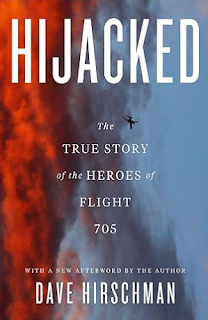
In August this year, I did one of my hardest projects, adapting a book based on a true story into a screenplay. I love to write stories and make up new characters and story worlds, but since all the characters were real and living, my creative license was restricted. I read the book four times to learn about the characters and what happened so I could write dialog and defend it with "I think he could have said this," but I couldn't add fictitious characters or make the existing characters into something they were not. For example, five of the six pilots were men, and although I'd like to have more than one female pilot, I don't think real-life Andy would like to be played by Andrea.

When I've watched movies, I used to be puzzled by the amount of producers and wonder "How many producers does it take to make a movie?" This movie, Hijacked, started as a book option by the first producer, who is now my friend, Melissa. We have two interesting things in common. First of all, she used to own a manufacturing plant in Detroit, supplying parts to the car factories like Ford, GM, etc. I used to own a technology company that supplied software to dealers to enable them to run their car dealerships and submit warranty claims and other data to the factories. Our other connection is my manager, who owns Little Studio Films and recommended me to Melissa. Melissa and her company Helicopter Productions is now developing my series, Last Hand, set in Las Vegas - and she is co-writing with me the pilot episode. The third producer mentioned in my August blog is sending Hijacked out to 20-30 studios, streamers, etc. When one of them bites, that will mean a fourth producer and finally, another producer will actually get the movie made. In order to get certain talent involved, they might want producer credits (and a share of the profit involved.) That is how a movie ends up with dozens of producers.


As soon as Hijacked was done, I got a job to write a screenplay as a sequel to another movie being made, Mama Dallas - Five Points. I had that screenplay as a guide, along with a treatment by another writer. But the best thing was the actual person whose family this story was about. We talked and emailed, and then I researched her family and the era. I read six different books that were about this time and place and watched the Godfather series again - probably for the 4th or 5th time.  I started a Google Docs file of the newspaper articles and facts from Ancestry.com (I'm a hobby genealogist) and, at one point, commented that I could write a book about the Del Gaizo family! Guess what? I wrote a book and the author's proof arrives today!


This was sort of a reverse adaptation. Studios and streamers like to make projects based on existing IP, but so far, the reviews have been great. It was a tough project, I first got a greenlight on September 3rd, then on September 19th, a big "stop, stop!" The text said firmly,  "Don't write the book of Augie; no activity beyond the script." I was sort of fired.


But since I was still writing the sequel script at the same time as the book, I kept making my notes and writing chapters. But I had a deadline. It was my deadline only - I wanted it done before the AFM - American Film Market November 5-10th in Las Vegas, where they planned to feature the two movies. A book would show the whole story, both screenplays and if they read the first few chapters, even a prequel!


I finally got the full green light again to write the book and signed the contracts on October 22, 2024. I sent the book off for Author proofs the next day. I had already had my amazing cover guy working on the cover for a few months. It was a difficult cover because the story involved NYC, trains, ships, and five key characters. I wanted them all on the cover. I had grown to love each one.


But the fun part was that everyone was dead. Okay, that might seem morbid, but unlike Hijacked, nobody is going to say, "Augie would never say that!" In fact, my co-writer and the actual descendant of this family wrote this to me;


"Your creative license was a big jump but so intriguing. It makes the story so much deeper...for me, watching you put all the pieces together is horrifyingly wonderful! I mean that as a compliment. Fabio becomes so much more disgusting with his entitled wealth. You are a marvel." -
Jody Fasanella


That one word, "marvel," meant the world to me - but I call her a jewel because she's had this jewel of a story inside her all these years, and she is truly a jewel. Although painful at times to work with everyone involved, in the end, I hope I've made a long-time friend of my co-author, and I hope she can play Mama Dallas someday or the mother in Last Hand. I need her to meet Melissa at AFM!


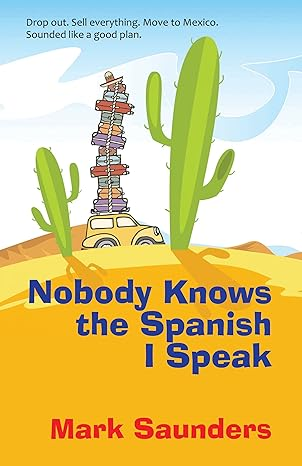
What's next? I'm adapting my good friend Mark Saunders's book, Nobody Knows the Spanish I Speak, into a comedy pilot with 6-8 episodes, which means I go to bed each night exhausted and laughing. Stay tuned for more!